Pull-Up Mastery: Complete 2026 Technique and Programming Guide
Master pull-ups with this comprehensive guide covering perfect form, progression strategies, and smart programming. From your first rep to advanced variations, build real pulling strength and muscle.
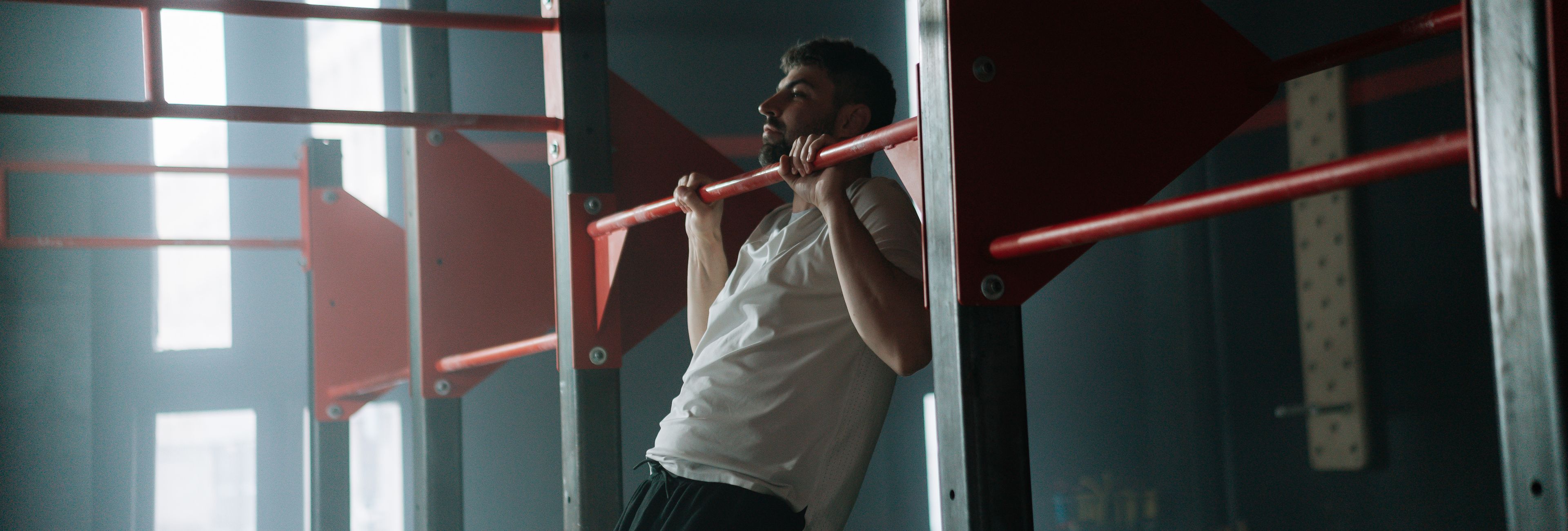
The Pull-Up Is Not Optional If You Want a Complete Physique
Your back is the foundation of a physique that looks like you actually train. Wide lats, a thick V-taper, and visible rear delts do not happen from cable rows and lat pulldowns alone. The pull-up is the movement that separates people who train their back from people who build their back. If you cannot perform a strict dead hang pull-up with full range of motion, that is the first problem you need to solve. No amount of face pulls, band pull-aparts, or machine alternatives will substitute for learning to move your own body through space. This is pull-up mastery, and by the end of this article you will understand exactly how to perform the movement correctly, how to program it for strength and size, and how to progress when basic pull-ups stop being challenging enough.
The pull-up has been a cornerstone of strength training for decades because it works. It loads the entire latissimus dorsi, the teres major and minor, the rhomboids, the lower trapezius, the rear deltoids, and the biceps under significant tension. The grip width, hand orientation, and scapular position all shift which muscles bear the heaviest load, but the fundamental movement pattern recruits more upper back tissue per unit of time than virtually any other pulling exercise. You need to be doing pull-ups. You need to be doing them with perfect technique. You need to be programming them correctly.
Correct Pull-Up Form From Dead Hang to Lockout
Before you load the movement with weight or add reps for volume, you need to establish the correct pattern. The dead hang is where every pull-up begins. Grip the bar with your hands slightly wider than shoulder width, hands in pronation (palms facing away from you), and allow your shoulders to fully extend. Your arms should be locked out. Your shoulders should sit in the socket, not shrugged up toward your ears. This is your starting position and it matters more than most people realize. The moment you initiate the pull, your scapulae should begin to retract and depress. This sets the shoulders in a stable position before the elbows begin to flex. Skip this step and you are pulling with bad mechanics that will eventually produce shoulder pain and limit your strength ceiling.
The first phase of the pull-up is scapular elevation against gravity. You are not bending your elbows yet. You are engaging the muscles that control your scapulae, the lower trapezius and serratus anterior, to establish a stable shoulder girdle. Think of this as a half-rep that nobody sees but everyone feels. Once your scapulae are set, you begin pulling by flexing your elbows and driving them toward the floor. Your chest should approach the bar as you ascend. The movement is vertical, not horizontal. You are pulling yourself up, not pulling yourself toward the bar in a rowing motion. This distinction is critical. When you reach the top position, your chin should clear the bar. If your chin is still below the bar, you have not completed the range of motion. Partial reps do not count.
The descent is just as important as the ascent. Control the eccentric phase. A three-second lowering phase builds more muscle than a fast drop, and it reinforces the neural pattern that keeps your shoulders safe when you eventually train weighted pull-ups. Do not let gravity yank your shoulders into protraction at the bottom. Catch the dead hang, reset your scapulae, and initiate the next rep. Each repetition is a clean, complete movement with a controlled tempo. This is pull-up technique at the level that produces results.
Common Pull-Up Errors That Limit Your Progress
The kipping pull-up has its place in explosive sports performance training, but if you are reading a guide on pull-up mastery for strength and hypertrophy, you need to understand why kipping destroys your back development. Kipping uses a hip drive to generate momentum that replaces the lat and bicep work you are supposedly training. The range of motion shrinks because momentum carries you through the portions where your muscles can actually handle load. You are not getting stronger. You are learning to cheat. If you want to build a pull-up that adds muscle mass and increases your relative strength, strict reps only.
Shrugged shoulders at the top position indicate you are letting your traps take over the movement. Your shoulders should remain down and packed throughout the entire repetition. If you cannot keep your shoulders packed at the top, you have reached the limit of your current strength. Do not continue reps with shrugs. Either add a pause at the dead hang to reset, or reduce your rep count and focus on the positions you can control with good form.
Excessive behind-the-neck pull-ups are a shoulder injury waiting to happen. The glenohumeral joint does not tolerate that range of motion under load in most shoulder anatomies. Pull to your chest or collarbone. Keep the weight over your center of mass. Your shoulders will thank you when you are still training pull-ups in your forties instead of nursing an impingement that never fully heals.
Using the wrong grip width limits your lat engagement. Hands too close together turns this into a curl variation and reduces lat activation. Hands too wide places excessive stress on the shoulder joint without adding meaningful lat stimulus. Start with a grip that is approximately one and a half times your shoulder width. You can experiment from there based on your anatomy and goals, but that is the starting point that works for most lifters.
Programming Pull-Ups for Maximum Strength and Muscle Growth
Pull-up programming depends entirely on your current ability level and your training goals. For a beginner who cannot yet perform multiple strict pull-ups, the priority is establishing the movement pattern and building relative strength. Use a regression that maintains the vertical pulling pattern while reducing the load relative to body weight. Resistance band pull-ups are acceptable in this phase, but only if the band provides genuine assistance through the entire range of motion without stretching so much that the bottom position becomes trivial. Australian rows and doorframe rows are better regressions because they maintain horizontal pulling strength that transfers directly to vertical pulling. Incorporate these movements three times per week with high frequency and low volume per session. Five sets of one to three reps with good form, performed frequently, builds the neural efficiency needed for a full pull-up faster than grinding out failed attempts.
Once you can perform five strict pull-ups in a row, you have graduated from the beginner phase. Now the programming branches based on your goals. If your primary goal is building maximum pulling strength, treat pull-ups like a main lift. Program them in the three to six rep range with a weight vest or dumbbell held between the feet. Three sets of three to five reps with two to three minutes of rest between sets. The loads should be challenging enough that the final rep of each set is a grind. Progressively add weight over time. If you were doing five bodyweight pull-ups and you add twenty pounds, you might drop to three or four reps. Stay in that range and build back up before adding more weight.
If your goal is hypertrophy, treat pull-ups as a volume exercise. Program higher rep sets with less additional weight or pure bodyweight. Eight to twelve reps per set, three to four sets, with sixty to ninety seconds of rest. The pump matters here. Squeeze the top position for a full second on each rep. Control the eccentric. The time under tension in this rep range with good form stimulates the muscle fiber recruitment needed for growth. You can also vary grip width and hand orientation within a session or across sessions to target different portions of the lat and back musculature. Wide grip pull-ups emphasize the lower lat. Close grip or neutral grip pull-ups increase bicep and upper lat involvement. Rotate between these variations to build a complete back.
For intermediate and advanced lifters, the conjugate approach works well. Alternate between maximum effort pulling days and repetitions days. On maximum effort days, perform weighted pull-ups with the heaviest load you can handle for one to three reps. On repetition days, perform bodyweight or light weight pull-ups for sets of eight to fifteen reps to build work capacity and metabolic stress. This combination prevents plateaus and develops both the strength ceiling and the muscular endurance that support long-term back development.
Progressions and Regressions for Every Level
Pull-up mastery requires you to know where you are in the continuum and program accordingly. If you cannot yet hang from the bar for thirty seconds, start there. Dead hang time under tension builds the grip strength and shoulder stability needed for pull-ups. Hang from a bar with straight arms and neutral shoulders for time. When you can hold this for thirty seconds, you have a foundation.
The isometric chin hold is the next progression. Jump to the top position of a pull-up and hold it. Your chin should clear the bar. Hold for as long as possible. When you can hold the top position for thirty seconds, your strength-to-weight ratio is sufficient for at least one strict pull-up. Practice pulling to that position from a dead hang and holding it at the top. This builds strength specifically in the range of motion you need.
For intermediate lifters who have plateaued at a certain rep count, several strategies break through stagnation. Add a pause at the dead hang between each rep. The reset forces you to initiate the pull from a dead stop rather than using the bounce from the previous repetition. Add a twenty-second eccentric on the descent. This dramatically increases time under tension and eccentric loading. Add weight in small increments. A five-pound weight vest changes the demand enough to force adaptation without ruining your technique. Reduce the volume for a week and then hammer it with higher volume the next week. Sometimes the plateau is a fatigue issue rather than a strength issue.
Pull-up mastery is not a single destination. It is a continuous process of refining technique, increasing strength, and expanding your rep range or load. The lifter who can perform five strict pull-ups has mastered the basics. The lifter who can perform fifteen strict pull-ups or hang fifty pounds for five reps has developed a different but equally valid expression of pull-up mastery. Your progression path depends on your training age, your goals, and your willingness to be patient with the process. Add pull-ups to your program three times per week. Track your reps and load in your logbook. Increase either volume or intensity over time. The pull-up will reward you with a back that looks like it was carved out of stone.