The Leg Press: When to Use It and When to Stop Hiding Behind It
The leg press is not a squat replacement. But it is not useless either. Here is exactly when and how to program it for maximum leg development.
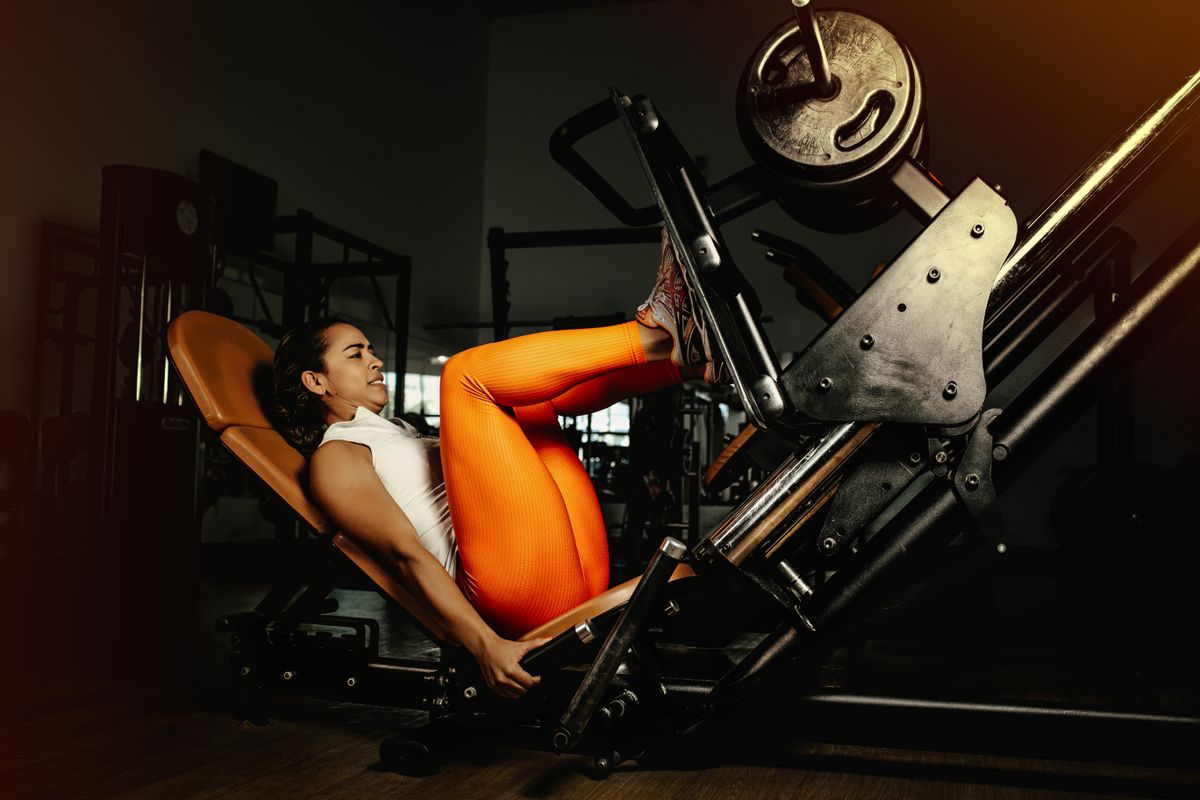
The leg press has a reputation problem. Strength purists treat it like a cheat code for people too lazy to squat. Machine haters dismiss it as nonfunctional. And somewhere in the middle, a lot of lifters are leg pressing three times a week, loading up every plate in the gym, and wondering why their legs are not growing.
None of these positions is fully right. The leg press is not a squat replacement, and it was never meant to be. But it is also not junk volume. When programmed correctly, the leg press is one of the most effective hypertrophy tools available for lower body development. The problem is almost never the machine. The problem is how people use it.
This article breaks down what the leg press actually does well, where it falls short, and how to program it so it earns its place in your training instead of taking up space.
What the Leg Press Does That Squats Cannot
The leg press has one major advantage over the squat: it removes the back as a limiting factor. In a squat, your legs might be capable of handling four hundred pounds, but if your erectors, core, or upper back give out at three hundred, your legs never get the stimulus they need. The leg press lets you push your quads and glutes to muscular failure without your trunk shutting the set down early.
This matters more than most people think. If you are a long limbed lifter with a torso that folds under heavy back squats, you are leaving quad stimulus on the table every time you fail a set because your back gave out. The leg press lets you fix that by giving your legs a dedicated loading vehicle that does not care about your leverages.
The leg press also allows for foot placement variations that target different muscle groups more precisely than the squat. Place your feet low on the platform and you get more quad involvement, especially the vastus medialis. Place them high and wide, and you shift the load toward your glutes and hamstrings. Narrow and high targets the adductors. These variations are not just cosmetic tweaks. They let you bias specific muscles through specific ranges of motion in a way that free weight squat variations simply cannot match.
For lifters dealing with lower back or hip injuries, the leg press is often the only way to train legs heavy without pain. A herniated disc does not care about your commitment to barbell training. If you cannot squat without pain, the leg press lets you keep building leg strength while your back heals. This is not a compromise. It is intelligent programming.
And then there is the fatigue argument. Heavy back squats are systemically taxing. They fry your central nervous system in a way that no other exercise does, which limits how much volume you can handle in a single session. The leg press is locally fatiguing but far less systemically demanding. This means you can do more leg volume per week with leg press sets than you could if every set was a back squat.
The Right Way to Set Up and Execute
Most people set up on the leg press like they are settling into a recliner. Back flat against the pad, feet placed wherever they land, pressing with whatever range of motion feels easy. This is how you spend three years leg pressing without your legs ever changing.
Start with your back flat against the pad. No air gap at the lower back. Your hips should be tucked under you, not tilting backward. If your pelvis rotates posteriorly at the bottom of the movement, your range of motion is too deep for your current mobility. Reduce the depth until you can maintain a neutral spine throughout.
For a quad dominant press, place your feet in the lower half of the platform, roughly shoulder width apart, with your toes pointed slightly outward. Lower the sled until your thighs are at least parallel to the platform. If you can go deeper without your tailbone curling off the pad, go deeper. More range of motion means more muscle activation, assuming you can control it.
For a glute and hamstring bias, move your feet higher on the platform and slightly wider. This shifts the moment arm toward the hip, requiring more glute and hamstring contribution. The range of motion will be shorter here. That is fine. You are targeting different musculature.
The press itself should be smooth and controlled. Lower the sled over two to three seconds. Do not bounce off the bottom. The turn-around should be deliberate, not a rebound. Press through the midfoot, not the toes. If your heels come off the platform at any point, your range of motion is too deep or your setup needs adjustment.
Lock your knees at the top, but do not hyperextend. A soft lockout keeps tension on the muscles and prevents joint strain. If you find yourself locking out hard and resting at the top between reps, you are using too much weight. The time under tension should be continuous from the first rep to the last.
Programming the Leg Press: Three Effective Approaches
The leg press works best as a secondary leg movement, not your primary lift. You build strength with squats and variations. You build size with leg press volume. Here are three ways to program it depending on your goals.
Approach one: hypertrophy bias.
If your primary goal is leg size, program the leg press after your primary squat movement. Do three to four sets of ten to fifteen reps at a moderate tempo. Lower for three seconds, pause for one second at the bottom, press for one second. This tempo eliminates momentum and keeps tension on the target muscles through the entire range. Rest ninety seconds to two minutes between sets. You want local fatigue, not systemic.
Use a foot placement that targets your weakest area. For most lifters, that means feet low on the platform for quad development. Add intensity techniques on the last set only. A rest pause set, where you hit failure, rest fifteen seconds, then go again, is enough to push the quad stimulus without turning the session into a suffering contest.
Approach two: strength carryover.
If your primary goal is squat strength, use the leg press to build the muscles that limit your squat. This means high foot placement for glute and posterior chain strength, or narrow placement for adductor and inner quad strength. Do sets of six to eight reps at a weight that challenges you in the last two reps. You are not training to failure here. You are building raw force production in the specific muscles that cave first in your squat.
Program these after your main squat work on days when you still have gas in the tank. Two to three sets is plenty. More than that and you start cutting into recovery for your primary lift.
Approach three: injury or deload alternative.
When your back, hips, or knees need a break from axial loading, the leg press becomes your primary lower body movement. In this case, treat it like a main lift. Progressive overload, two to three sessions per week, varying rep ranges across those sessions. One heavy day in the four to six rep range. One moderate day at eight to twelve. One volume day at twelve to twenty. This keeps the stimulus varied and prevents adaptation from stalling.
When you transition back to squatting, do not abandon the leg press entirely. Drop it to two sets as a finisher and let the squat take the primary slot again. The leg press volume you built during your time off will translate to stronger squats within a few weeks.
The Mistakes That Waste Your Time on the Leg Press
The single most common mistake is using too much range of motion with too little control. The leg press sled weighs seventy five to a hundred pounds on most commercial machines. Add a few plates and people feel invincible. They lower the sled until their knees touch their chest, bounce off the bottom, and partially extend their legs before starting the next rep. This is not a leg press. This is a spinal compression exercise.
When your pelvis tucks under at the bottom of the movement, your lumbar spine is being loaded in flexion under weight. Over time, this is a recipe for disc problems. If you cannot reach full depth without your tailbone lifting, shorten the range. A controlled partial rep is infinitely better than a full range of motion that destroys your lower back.
The second mistake is ego loading. Everyone has seen the person who loads twelve plates on each side and moves the sled four inches. They walk away feeling like they moved a mountain. They built nothing. The legs respond to mechanical tension through a full range of motion. If your range is four inches, the mechanical tension is concentrated in a tiny arc that produces minimal growth stimulus. Drop the weight, deepen the range, slow the tempo, and your legs will actually change.
The third mistake is treating the leg press as a replacement for the squat. The leg press does not train stability, balance, or coordination. It does not require you to brace your trunk under load, control your center of gravity, or coordinate your entire kinetic chain. These are skills that matter outside the gym and inside it. If you leg press but never squat, you are building strength without the ability to express it in functional patterns. Use the leg press to supplement your squatting, not to replace it.
The leg press is a tool. Like every tool, it works when you use it correctly and fails when you use it wrong. Set up with intention, control the tempo, choose the right foot placement for your goals, and program it as a complement to your primary lifts. Do that, and it will build legs that the squat alone might never give you.