Pull-Up Progression: From Zero Reps to Sets of Ten
You cannot do a single pull-up. That is fine. Here is the exact progression that takes you from banded negatives to clean sets of ten, with no shortcuts.
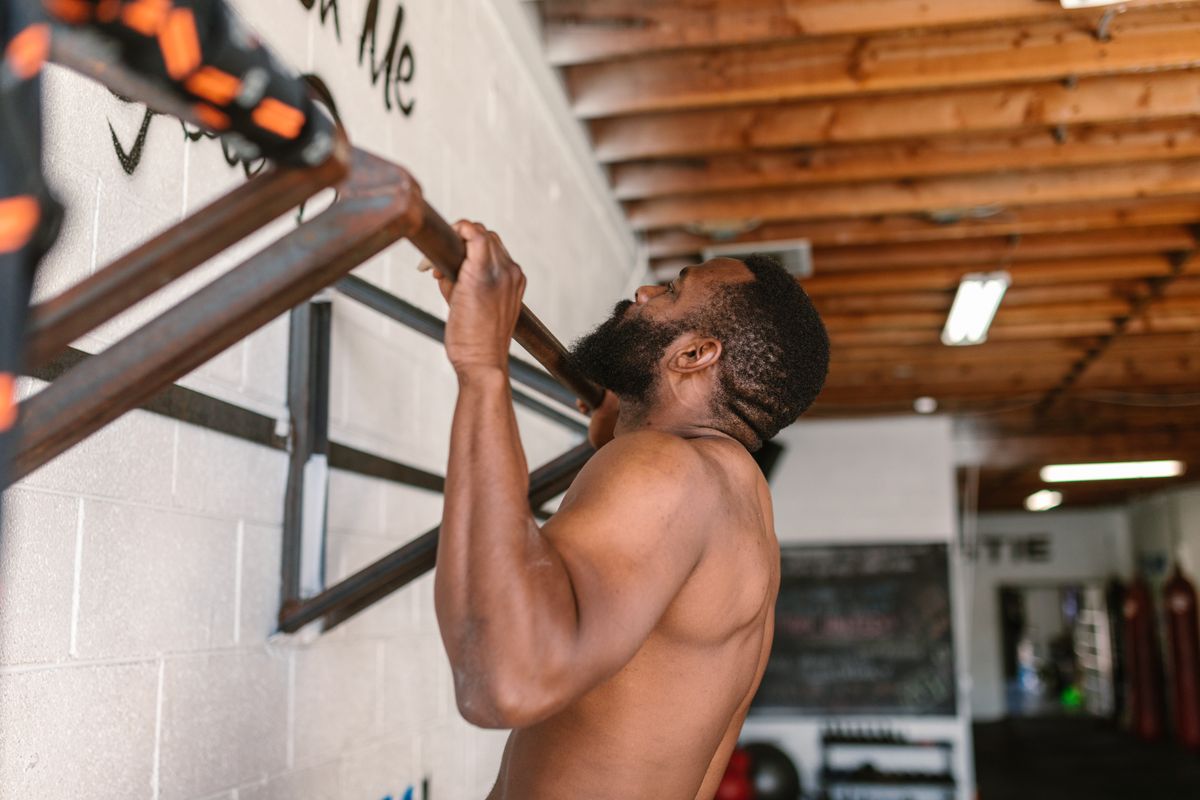
The pull-up is the single most honest exercise in the gym. There is no way to fake it. You either pull your bodyweight over the bar or you do not. No machines to adjust, no momentum to hide behind. Just you and gravity, and gravity does not care about your excuses.
If you cannot do a pull-up right now, that is not a failure. It is a starting point. Almost nobody walks into a gym and cranks out a set of ten on day one. The pull-up has to be earned through a specific, structured progression. Skip steps and you will stall. Follow the steps and you will get there.
This article maps out that progression in detail. Each phase builds directly on the one before it. You do not move to the next phase until you hit the exit criteria for your current one. There are no shortcuts, but there is a clear path.
Phase One: Building the Foundation With Negatives and Bands
Before you can do a single pull-up, you need to develop the strength to lower yourself under control. This is where eccentric, or negative, pull-ups come in. Jump to the top position, hold briefly, then lower yourself as slowly as possible. A good negative takes five to eight seconds from top to bottom. If you can do that for three sets of three, you are ready to start adding volume.
Pair negatives with band-assisted pull-ups. Loop a resistance band around the bar and place one foot in the bottom. The thicker the band, the more assistance it provides. Start with whatever band lets you do five to eight clean reps. Your form on band-assisted pull-ups should look identical to unassisted ones. Full dead hang at the bottom, chin over the bar at the top, controlled tempo throughout. If you are kipping or swinging, the band is too thin or your form is off.
The schedule for phase one is three sessions per week. Each session includes three sets of negatives, three to five seconds per rep, for three reps. Follow that with three sets of band-assisted pull-ups in the five to eight rep range. Rest two minutes between sets. This is not cardio. Treat every set like a strength set.
Between sessions, do hanging practice. Grab the bar and just hang for thirty to sixty seconds. This builds grip strength and accustoms your shoulders to the bottom position. Most beginners fail pull-ups before their muscles give out because their grip or shoulder position collapses. Hanging fixes both.
Phase one exit criteria: five second negative for three sets of five, plus five band-assisted pull-ups with a band that provides minimal assistance, using strict form. Most people reach this in four to eight weeks depending on starting strength and bodyweight.
Phase Two: Your First Clean Pull-Up and Building Volume
Getting your first strict pull-up is a milestone. It is also where most people go wrong. The temptation is to immediately try for two, three, four reps before you have earned them. You end up grinding, cheating, and building bad patterns that take months to undo.
Instead, grease the groove. When you have exactly one pull-up, doing max effort sets is counterproductive. You will fatigue your neuromuscular system without accumulating enough volume to drive adaptation. The better approach is to do singles, multiple times throughout the week, with full recovery between each one.
If you train at home or have access to a bar during the day, do one pull-up every few hours. Five to eight singles per day, every day. Each rep is fresh, each rep is clean, and you accumulate twenty to forty quality reps per week without ever going to failure. This is how you build the neural pattern and connective tissue strength needed to add rep number two.
If you only have access to the bar during gym sessions, structure your pull-up work at the start of each workout, right after your warmup. Do three sets of one to two reps, resting two to three minutes between sets. Then move on to your accessory work: band-assisted pull-ups, lat pulldowns, or bodyweight rows. The goal is to accumulate total pulling volume without burning out on max effort attempts.
Once you can do three strict pull-ups in a single set, you are ready for phase three. The transition from one rep to three is usually faster than zero to one. Your body has already learned the pattern. Now it is just adding strength.
Phase Three: Volume Accumulation and the Road to Ten
Three strict pull-ups is the baseline. From here, the goal is volume. You need more total reps per week, and you need them at consistent quality. The best tool for this is a simple linear progression with built-in backoff sets.
Train pull-ups three times per week. Day one: three sets of as many reps as possible, stopping one rep short of failure. Rest two to three minutes between sets. Day two: five sets of half your day one max rep count. If you hit five, four, four on day one, do five sets of two on day two. Day three: three sets of as many reps as possible again, trying to beat your day one numbers by at least one total rep across all sets.
This gives you high intensity on days one and three, with moderate volume on day two that does not trash your back and biceps. The total weekly volume climbs steadily without ever pushing you to failure in a way that accumulates fatigue.
Add chin-ups as an accessory. Chin-ups, palms facing you, shift more load to the biceps and are typically easier than pull-ups for most people. Doing both variations within a week gives you slightly different stimulus and lets you accumulate more pulling volume without overtaxing any single movement pattern.
Once you hit sets of five to six, introduce weighted pull-ups. Use a dip belt and add five to ten pounds. Do three sets of three to five reps with the weight, then strip the belt and do two sets of bodyweight reps to failure. The weighted work builds absolute strength. The bodyweight backoff sets build endurance and volume tolerance. This combination is what gets you from five to ten reps.
The final push from eight to ten is mostly mental. Your muscles can do it. Your grip holds. What fails is your willingness to keep pulling when every fiber in your lats is screaming. This is where the volume you built in phases one and two pays off. Your body knows it can do this many reps. Trust the work.
The Mistakes That Keep People Stuck
The biggest mistake is skipping the eccentric phase. People jump straight to band-assisted pull-ups without first building the eccentric strength to lower themselves under control. The problem is that band assistance changes the strength curve. It helps most at the bottom, where you are weakest, and least at the top. This means you never develop the starting strength needed for the bottom of the pull-up. Negatives build that starting strength. Do them first.
The second mistake is kipping. A kipping pull-up is a different exercise than a strict pull-up. It involves a hip drive and momentum pattern that generates force through momentum rather than muscular contraction. If your goal is strict pull-up strength, kipping is actively counterproductive. It teaches your nervous system to rely on momentum instead of recruiting muscle fibers in sequence. Save kipping for CrossFit. Train strict for strength.
The third mistake is ignoring grip. If your forearms burn before your lats fatigue, your grip is the limiting factor. Fix this by adding dead hangs to your routine. Hang from the bar for thirty to sixty seconds at the end of each pull-up session. Farmer carries with heavy dumbbells also build grip endurance. A stronger grip means more reps, period.
Body composition matters more than most people admit. Every pound of body fat you carry is a pound of external resistance on every pull-up. If you weigh two hundred pounds at twenty five percent body fat and you drop to two hundred pounds at fifteen percent body fat, you have not lost any lean mass but you have made every pull-up easier. This is not about being skinny. It is about the strength to weight ratio. If your pull-ups are stuck and your programming is solid, look at your body composition before you add more volume.
Finally, be patient. The pull-up is one of the slowest progressing exercises for most people, especially heavier individuals. If you are over two hundred pounds, the road from zero to ten is measured in months, not weeks. That is fine. Consistency beats intensity every time. Show up, do the work, follow the progression, and you will get there.