Best Quadriceps Exercises for Leg Growth: The 2026 Hypertrophy Guide
Stop guessing with your leg days. Learn the exact movement patterns and exercise selections required to maximize quadriceps hypertrophy and strength.

The Mechanics of Maximum Quadriceps Hypertrophy
Your legs are not growing because you are doing a variety of exercises. They are not growing because you lack a special machine. They are not growing because you are not doing enough sets. Your legs are not growing because you lack a systematic approach to mechanical tension. To trigger actual muscle growth in the quadriceps, you must understand that the muscle responds to load and stretch. Most lifters treat leg day like a cardio session. They move weight from point A to point B without ever actually challenging the muscle fibers. If you want to maximize the best quadriceps exercises for leg growth, you have to stop thinking about moving the weight and start thinking about stressing the muscle. This means prioritizing a full range of motion over the number on the plate. A partial rep is a wasted rep. If you are cutting the bottom two inches off your squats, you are leaving growth on the table. You need to drive the knee forward and achieve a deep stretch to recruit the maximum number of motor units.
The quadriceps are a massive complex consisting of four distinct muscles. While you cannot isolate each one perfectly, you can shift the emphasis based on your foot placement and joint angles. The vastus lateralis, vastus medialis, vastus intermedius, and rectus femoris all require significant load to grow. Many people believe that high reps are the secret to leg growth. This is a lie. While metabolic stress plays a role, mechanical tension is the primary driver of hypertrophy. You need to be working in a range that challenges you both in the five to eight rep range and the twelve to fifteen rep range. If you only ever do sets of twenty, you are training for endurance, not size. If you only do sets of three, you are training for neurological strength, not hypertrophy. A balanced program utilizes both ends of the spectrum to ensure every type of muscle fiber is fatigued. This is why your logbook is critical. If you are not adding weight or reps every single session, you are simply exercising. Exercising is for health. Training is for growth.
Most people fail at leg day because they cannot handle the systemic fatigue. Leg training is grueling. It demands more from your central nervous system than any other body part. When you hit a set of deep squats to failure, your entire body feels it. This is where most lifters quit. They shorten the range of motion to make the set feel easier. They stop when the burn becomes uncomfortable. This is the exact point where growth begins. The burn is just a byproduct of lactic acid accumulation; it is not the indicator of growth. The indicator of growth is the progressive increase of load over time. If you cannot track your progress, you cannot improve. You must record every set, every rep, and every single pound added to the bar. If you are not tracking, you are guessing. And guessing is for people who are okay with average legs.
Prioritizing Compound Movements for Quad Mass
The foundation of any leg program must be a heavy compound movement. The squat is the gold standard for a reason. It allows for the greatest amount of absolute load to be placed on the quadriceps. However, the barbell back squat is not for everyone. If your anatomy prevents you from hitting depth without rounding your lower back, the back squat is not the best quadriceps exercise for leg growth for your specific body. You can switch to the high bar squat or the front squat to shift the center of gravity and put more stress on the quads. The front squat is particularly effective because it forces an upright torso, which increases the degree of knee flexion. More knee flexion equals more quad recruitment. If you are using a low bar position, you are engaging more of your posterior chain, which is great for overall strength but less efficient for pure quad hypertrophy.
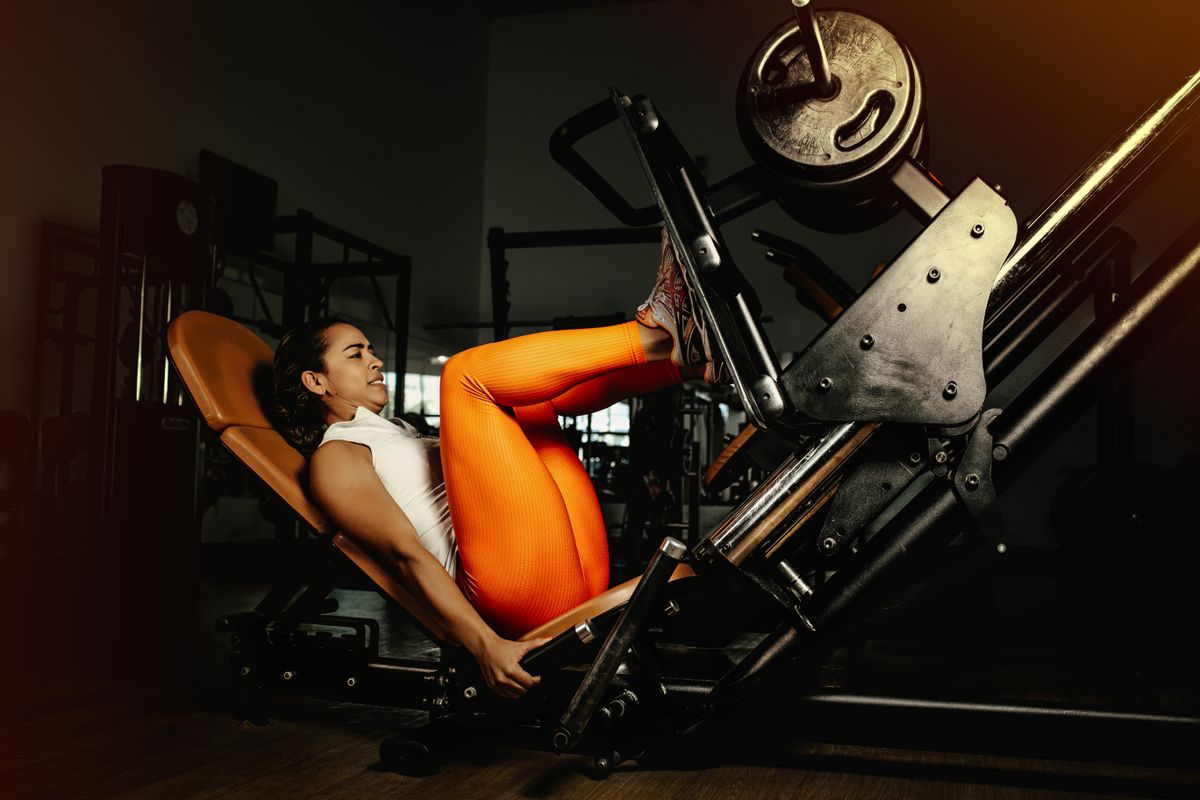
Hack squats and leg presses are often dismissed as machine work, but they are essential for hypertrophy. The reason for this is stability. When you are in a squat rack, a significant portion of your energy is spent balancing the weight and stabilizing your core. When you are in a hack squat machine, the stability is provided for you. This allows you to push your quadriceps to absolute failure without your lower back being the limiting factor. For maximum growth, you should use the leg press to drive your knees toward your chest, ensuring you do not let your lower back peel off the seat. If your butt is lifting off the pad, you are shortening the range of motion and risking a spinal injury. Push through your heels and control the eccentric phase. The descent should be slow and deliberate. Dropping the weight quickly is a waste of a repetition. You want the muscle to be under tension for as long as possible during the lowering phase to create more microtrauma in the muscle fibers.
The choice between a barbell and a machine depends on your goal for the day. If you want to build raw, systemic strength, start with the barbell. If you want to maximize hypertrophy, lean more heavily on the machines. The key is to combine them. Use the barbell to establish a baseline of strength and then use the machines to add the volume necessary for growth. Many lifters make the mistake of doing only one or the other. If you only do machines, you lack the core stability and functional strength of a lifter. If you only do barbells, you often hit a wall where your lower back fails before your quads do. By integrating both, you bypass the limitations of your anatomy and force the quadriceps to grow. This is the only way to achieve the kind of leg development that looks impressive even in loose clothing. You must be willing to push through the pain and embrace the discomfort of the deep stretch.
Isolating the Quads with Targeted Volume
Once you have exhausted yourself with compound movements, you must move to isolation. The leg extension is the only way to truly isolate the quadriceps without involving the hips. This is where you can target the rectus femoris, which is not fully taxed during squats because it crosses both the hip and knee joints. To get the most out of leg extensions, you must avoid the common mistake of swinging the weight. Sit deep into the seat, grip the handles to keep your hips locked, and squeeze the muscle at the top of the movement. Hold the contraction for a full second. If you are just bouncing the weight, you are using momentum, not muscle. The leg extension is a tool for metabolic stress. It is the perfect exercise to finish a workout with high rep sets of fifteen to twenty, driving blood into the muscle and creating a massive pump.
Many lifters ignore the importance of the eccentric phase on isolation movements. The muscle grows more during the lowering phase than the lifting phase. If you are letting the weight crash down on the leg extension, you are throwing away half of your gains. Control the weight on the way down. Fight the gravity. This increases the time under tension and forces the muscle to work harder. When you combine this with the best quadriceps exercises for leg growth, you create a comprehensive stimulus that targets every part of the leg. You should not be doing isolation work at the start of your workout. If you fatigue the muscle with extensions first, your compound lifts will suffer. The order of operations is simple: heavy compounds, stability machines, and then isolation. This sequence allows you to move the most weight when you are fresh and then finish the muscle off with focused, high rep work.
Another overlooked aspect of quad growth is the use of different foot positions. While the primary movements remain the same, slight adjustments can change the feel of the exercise. On a leg press, placing your feet lower on the platform increases knee flexion, which puts more load on the quads. Placing them higher shifts the load toward the glutes and hamstrings. If your goal is specifically quad growth, keep your feet low and shoulder width apart. Do not let your knees cave inward. Push them out in line with your toes. This not only protects your joints but ensures that the force is being distributed across the quadriceps effectively. If you feel the tension shifting away from your quads, adjust your stance immediately. Your logbook should not just track weight and reps, but also the specific foot placement and seat settings you used. This ensures that when you return to the gym, you are replicating the exact stimulus that worked previously.
Programming for Long Term Leg Growth
Consistency is the only thing that matters in the long run. You cannot train legs once every two weeks and expect them to grow. To maximize the best quadriceps exercises for leg growth, you need a frequency of at least two times per week. Training legs once a week is enough for maintenance, but not for growth. By splitting your leg volume into two sessions, you can maintain higher intensity throughout the workout. Instead of doing six exercises in one day and failing by the fourth, do three exercises twice a week. This allows you to hit every set with maximum effort and better form. You should alternate between a heavy day and a hypertrophy day. The heavy day focuses on the five to eight rep range with movements like the barbell squat. The hypertrophy day focuses on the ten to fifteen rep range with movements like the hack squat and leg press.
Progressive overload is the law of the gym. If you are using the same weight today that you used three months ago, your legs will look exactly the same as they did three months ago. You must strive to add weight to the bar or perform more reps with the same weight every single session. This requires a level of discipline that most people lack. It means doing the set that feels like it will kill you. It means pushing past the point where your brain tells you to stop. If you finish a set and you feel like you could have done two more reps, you did not train to failure. You did not create enough stimulus for growth. You must train to the point of technical failure, where you cannot perform another rep with perfect form. This is the only way to force the body to adapt and build new muscle tissue.
Recovery is where the growth actually happens. You do not grow in the gym; you grow while you sleep and eat. If you are training your legs with extreme intensity but only sleeping five hours a night, you are wasting your time. Your body needs protein, calories, and rest to repair the damage you did during your workout. Ensure you are eating enough carbohydrates to fuel your training and enough protein to rebuild the muscle. Do not fall for the trap of doing too much cardio on leg days. If you are spending an hour on the treadmill before you squat, you are draining the glycogen that your muscles need to push heavy weight. Save the cardio for your off days or do it after your lift. Your priority must be the weight on the bar. Everything else is secondary.
Stop looking for a magic exercise or a secret supplement. There is no such thing. The secret is boring. The secret is doing the best quadriceps exercises for leg growth with a high degree of intensity and a relentless commitment to progressive overload. It is about the willingness to suffer under a heavy bar and the discipline to track every single rep. If your legs are small, it is because you have not pushed them hard enough. It is because you have avoided the deep squats and the brutal leg presses. Start today. Open your logbook. Set your goals. Stop making excuses and start moving the weight. The only thing standing between you and massive quads is the work you are currently avoiding. Get under the bar and earn your growth.