Shoulder Press Variations: The Complete Guide to Bigger Delts (2026)
Master the most effective shoulder press variations for maximum deltoid development. Learn proper form, progression strategies, and which pressing movements build the biggest, most defined shoulders.

Why Your Shoulder Press Determines Your Upper Body Development
If your shoulders are lagging, your entire upper body physique suffers. The deltoids are the cap on the V-taper. They are the muscle group that makes a wide back look even wider. They are what people notice when you wear a fitted shirt. And the shoulder press is the exercise that builds them more effectively than anything else in your arsenal.
Yet most lifters treat the shoulder press as an afterthought. They put it at the end of their push day, after bench press and incline press, phoning it in with light weight and sloppy form. They wonder why their delts never grow while they chase endless lateral raise variations. The truth is simple. Compound overhead pressing builds the deltoids in ways isolation work never can. You need to prioritize it, program it intelligently, and master the variations that serve your specific goals.
This guide covers the shoulder press variations that matter, when to use each one, and how to program them for maximum deltoid development. No fluff. No filler. Just the mechanics and programming principles that separate lifters with impressive shoulders from those who keep spinning their wheels.
Standing vs Seated: The Fundamental Choice
Your first decision with any shoulder press variation is whether to stand or sit. This choice affects everything from muscle activation to spinal loading to long-term joint health. Most lifters default to one or the other without understanding the tradeoffs, and that is exactly how you get mediocre results and nagging shoulder issues.
The standing overhead press loads the entire posterior chain. Your core fires constantly to prevent trunk hyperextension. Your glutes and hamstrings contribute to overall stability. The result is a more total body lift that demands more from your stabilizing musculature. If your goal is developing functional strength that transfers to athletic performance or simply building a body that works as hard as it looks, the standing press earns the priority.
The seated press removes the lower body from the equation. No leg drive, no hip extension, no posterior chain involvement. This allows you to isolate the shoulders more directly and load them heavier without worrying about your ability to maintain an upright torso. If you are limited by core endurance rather than shoulder strength, the seated press lets you focus on what actually needs training.
Both variations have legitimate applications. Competitive powerlifters favor standing presses because the movement is contested in their sport and they need total body integration. Bodybuilders often prefer seated variations to remove technique variables and focus purely on shoulder hypertrophy. The standing press should probably be your default because it develops more complete athleticism and challenges your core in ways that carry over to every other lift. But if you have specific reasons to isolate the shoulders or are dealing with hip or back limitations that make standing pressing uncomfortable, the seated variation serves a legitimate purpose.
Barbell, Dumbbell, and Machine: Choosing Your Weapon
The equipment you choose changes the demand profile of the shoulder press in ways that matter for your development. Understanding these differences allows you to make strategic choices rather than arbitrary ones.
The barbell overhead press is the gold standard for building shoulder strength and size. The fixed grip and symmetrical loading force both deltoids to work equally hard. The bar path is predictable, which allows you to load heavier than you could with free weights that require more stabilization. Heavier loads mean greater mechanical tension, and mechanical tension is the primary driver of muscle growth when other variables like volume and frequency are adequate. If you want to build boulder shoulders, the barbell press should be a cornerstone of your programming.
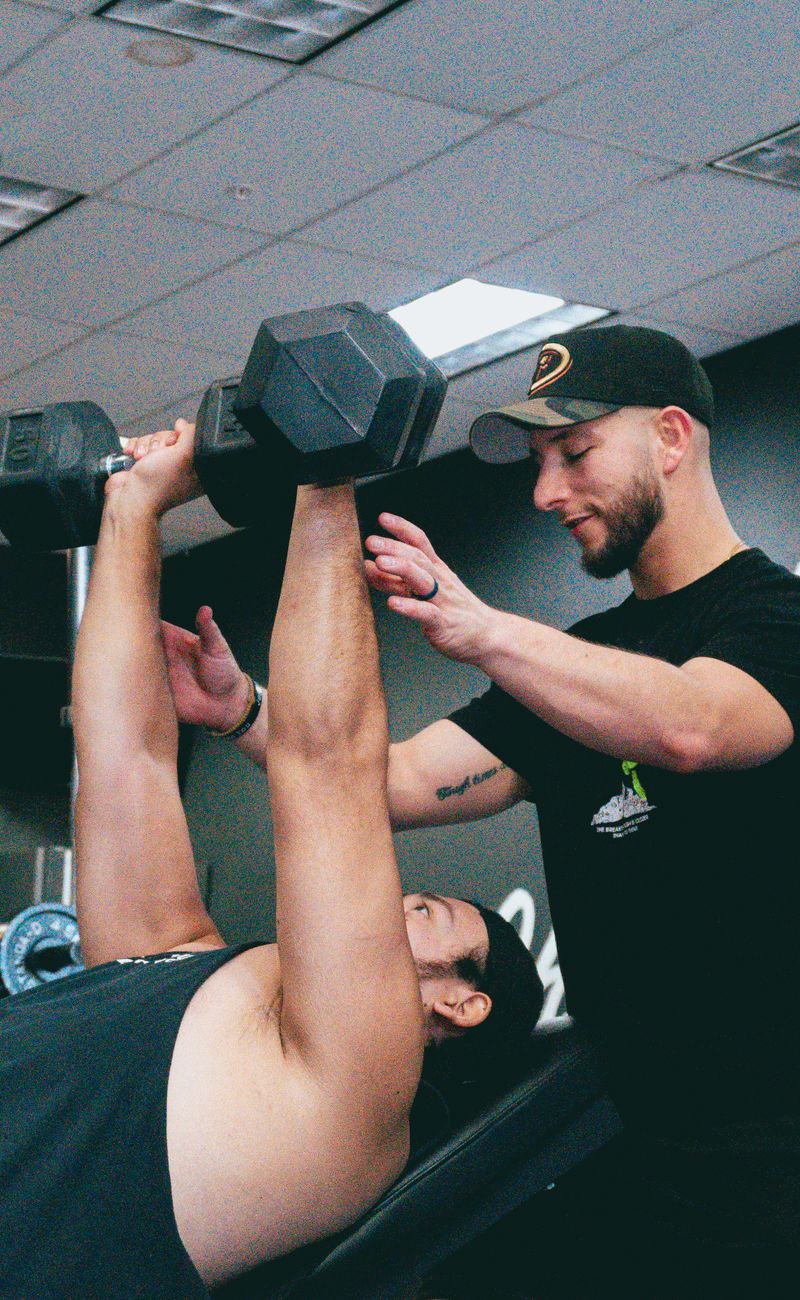
The dumbbell shoulder press introduces a different challenge. Each arm must control its own weight, which means no hiding a weak side behind bilateral loading. The increased stabilization demand recruits more muscle fibers in the shoulders and upper chest. The ability to press in a neutral grip or rotate the wrists during the movement reduces joint stress for many lifters. Dumbbells also allow a greater range of motion at the bottom position, which stretches the deltoids under load and may contribute to hypertrophy.
Machine shoulder press variations serve a different purpose. They provide consistent loading throughout the movement arc without requiring stabilization effort. This makes them effective for high volume isolation work and allows you to push closer to failure without safety concerns. If you are training alone and want to do high rep sets without a spotter, the machine press is a legitimate option. They also shine for drop sets and intensity techniques because you can modulate the weight mid-set without technique breakdown.
Your best approach is to use all three across your training cycle. The barbell press for strength work where you chase heavy triples and fives. The dumbbell press for hypertrophy phases where you want to explore that deeper range of motion and address any side-to-side imbalances. The machine press for volume accumulation and assistance work where you want isolation without the technical demands.
Programming Your Shoulder Press for Maximum Hypertrophy
How you program the shoulder press matters as much as which variation you choose. The rep ranges, set structures, and frequency you apply determine whether you build muscle or just maintain what you have.
For hypertrophy, your shoulder press work should occupy the moderate rep range. Five to eight reps per set allows you to use substantial weight while maintaining enough time under tension for muscle growth stimulus. Sets of three or four reps build strength but contribute less directly to size unless you are a beginner where neural adaptations drive early growth. Sets of ten or more push into muscular endurance territory and are better reserved for assistance work and isolation variations.
Volume is the primary driver of hypertrophy for most natural lifters. You need enough total work to stimulate growth without accumulating so much fatigue that recovery suffers. For most intermediate lifters, three to five working sets of the primary shoulder press variation per session, performed twice weekly, hits the right volume. That is six to ten total sets per week across your programming cycle. You can build from there if you are recovering well and progressing consistently.
Progressive overload applies to the shoulder press just like every other lift. You need to add weight, reps, or sets over time or growth stops. The simplest progression strategy is to add one rep per set each week until you hit the top of your rep range, then add weight and reset. If you are pressing 185 pounds for five sets of five this week, next week you press 185 for five sets of six. The week after, 185 for five sets of seven. When you hit your target of eight reps per set, you add five pounds and work back down to five reps. This approach keeps you in the hypertrophy sweet spot while systematically increasing your performance.
Fatigue management determines whether your shoulder press programming succeeds or leaves you overtrained and plateaued. The shoulders respond poorly to excessive frequency compared to muscles like quads or back. Twice weekly pressing with adequate recovery between sessions produces better long-term results than four or five sessions that accumulate fatigue faster than you can recover from it. Watch for warning signs like joint ache that persists beyond 24 hours after training, strength stagnation despite adequate sleep and nutrition, and shoulder impingement feelings during pressing or reaching movements.
Common Shoulder Press Mistakes That Limit Your Progress
Most lifters make the same errors with overhead pressing. They compromise their results and increase injury risk because nobody told them what they were doing wrong. Fix these mistakes and your shoulder press will transform.
The first major mistake is pressing with a crouched torso and excessive lean back. This happens when the weight becomes too heavy relative to your actual pressing strength. You compensate by using your lower back to lever the bar up rather than pressing with your deltoids. The result is a lower back that aches, reduced deltoid activation, and a technique pattern that will eventually cause injury. The solution is honest weight selection. If you cannot press with a mostly vertical torso and minimal back involvement, the weight is too heavy. Either reduce the load or spend time building your strict press strength before adding weight.
Another common error is incomplete range of motion. Partial reps might let you move more weight, but they shortchange your deltoid development and create strength imbalances that manifest as joint problems. You want the bar to touch your collarbone or upper chest at the bottom of each rep. You want full lockout at the top with the bar over your shoulders and your head slightly forward. If you are bouncing out of the bottom position or cutting the lockout short, you are leaving gains on the table and creating movement patterns that invite injury.
Neglecting unilateral work is a subtler mistake that compounds over time. Bilateral pressing hides strength imbalances. Your stronger side can compensate for the weaker one rep after rep, year after year, until the disparity becomes significant and symptomatic. Dumbbell pressing exposes these imbalances and forces you to address them. Your weak side gets the same number of reps at the same weight, which is the only way to actually correct the imbalance. Include dumbbell pressing variations in your programming specifically to identify and correct these issues.
Finally, many lifters ignore shoulder pressing entirely or treat it as an afterthought. They prioritize bench press, build an impressive chest, and wonder why they look front-heavy with underdeveloped shoulders. If you want a physique that looks like you train with intention, you need to press overhead. You need to press heavy. You need to press consistently. The shoulder press does more for your upper body development than any other single exercise you can do.
Pick your variation. Start loading the bar. Build your shoulders with the same discipline you apply to every other muscle group. The deltoids you build today will define your physique for years to come.