Incline Bench Press: Build Upper Chest Muscle Fast (2026)
Master the incline bench press with perfect form to target your upper chest. This comprehensive guide covers setup, grip width, and training variables for maximum upper chest hypertrophy.

Your Flat Bench Is Not Enough For Upper Chest Development
If you have been hammering flat bench press for months and your chest still looks like a flat sheet, your problem is not insufficient effort. Your problem is biomechanics. The flat bench press recruits your sternal pectoralis major as the primary mover. Your clavicular pectoralis major, the upper chest fibers that give your chest that full, defined look, requires a different angle. That angle is the incline bench press. Done correctly, the incline bench press targets your upper chest with surgical precision. Done incorrectly, it becomes a front delt trap masquerading as chest work. The difference between those two outcomes is knowledge and execution. This article covers both.
Most lifters avoid the incline bench press because it feels awkward, or they do it with so much incline that their shoulders absorb most of the stress. The result is shoulder pain and minimal chest activation. Those lifters then conclude that incline pressing does not work. They are wrong. The incline bench press works. You are just doing it wrong. This is the guide that fixes that.
The Biomechanics of Incline Bench Press Training
The angle at which you press determines which muscle fibers fire. When you lie on a flat bench, your arm travels through a plane that optimally loads the lower and middle sternal fibers of your pectoralis major. When you shift to an incline bench, your arm trajectory changes. Your humerus moves in a more vertical direction, and this shift brings your clavicular head into play. Your clavicular pectoralis major originates on your collarbone and inserts on your humerus. It is the muscle responsible for the upper chest sweep that makes a developed chest look complete from any angle.
Research on electromyographic activity during chest pressing variations shows consistent results across multiple studies. The incline bench press at angles between 30 and 45 degrees produces the highest upper chest activation relative to other pressing variations. Angles below 30 degrees still shift activation toward your upper chest compared to flat pressing, but the effect is more subtle. Angles above 45 degrees begin to shift load away from your chest and onto your anterior deltoids. Your front delts are secondary pushers. They should assist your chest, not replace it. If your incline press feels more like a shoulder press, your angle is too steep.
Most experienced lifters find their optimal range between 30 and 45 degrees. Some respond better at 30 degrees. Some at 45 degrees. The variation comes down to individual anthropometry, specifically your shoulder joint geometry and torso length relative to the bench. Test both angles during your next training cycle and notice which one lets you feel your upper chest working hardest. Trust that feedback. Your logbook should record which angle you used and how it felt.
Programming the Incline Bench Press for Maximum Upper Chest Growth
Training frequency and volume for your incline bench press depend on where it sits in your overall program structure. If you run a traditional push/pull/legs split, the incline bench press belongs in your push day. You can train it once or twice per week depending on your total weekly volume for chest pressing movements. Two sessions per week is optimal for most natural lifters who want serious upper chest development. Three sessions risks insufficient recovery between sessions if you are training with appropriate intensity.
Sets and rep schemes for the incline bench press should reflect your training goal. If you are building base strength in your upper chest, use lower rep ranges between 4 and 6 repetitions with weight that prevents failure by the final rep. If you are prioritizing hypertrophy, the 8 to 12 rep range delivers the best stimulus for muscle growth. You can include both rep ranges within the same training week by periodizing your volume. A sample approach includes one heavy incline bench day at 5 sets of 5 reps and one hypertrophy incline day at 3 or 4 sets of 10 reps. Alternate these across training weeks to drive both strength and size.
Progressive overload on the incline bench press follows the same principles as any other compound lift. You add weight when you complete all prescribed reps at your current weight. You add sets when you reach the upper rep range consistently for multiple sessions. You vary your tempo when plateaus occur. You occasionally test your one rep max to track strength progression. Your logbook tracks every session so you know exactly when to push for the next jump. Without that documentation, you will repeat the same weights week after week and wonder why your chest is not growing.
The incline bench press does not replace your flat bench press. It complements it. Your flat bench develops your mid chest thickness and overall pressing strength. Your incline bench develops your upper chest sweep and clavicular fiber development. Together they produce a complete chest that looks impressive from every angle. Ditching flat bench entirely in favor of incline work is a mistake. Ditching incline work entirely because flat bench feels more natural is also a mistake. Program both and rotate which variation leads your training based on your current emphasis.
Proper Form and Technique for Incline Bench Press
Your setup determines everything on the incline bench press. Lie on the bench with your feet flat on the floor. Your back should have a natural arch, not a rigid flat position. The arch comes from your physiology, not from deliberate spine manipulation. Position yourself so your upper chest is near the top of the pad where the angle creates the most advantageous range of motion for your target fibers. Your eyes should be level with the top of the rack when lying down.
Grip width on the incline bench press should be slightly narrower than your flat bench grip. A medium grip, typically with your ring finger at the knurling marks on a standard barbell, works well for most lifters. Wider grips increase front delt involvement and shoulder stress. Narrower grips increase tricep involvement. You want a grip that puts your chest fibers in the primary role. Experiment within a safe range and note which grip produces the most upper chest sensation.
Unrack the bar with a controlled exhale and position it over your upper chest, not your face. Your arms should be nearly locked at the starting position. Lower the bar to your upper sternum or the area just below your clavicles. The bar should travel in a straight line to and from this point. Do not bounce the bar off your chest at the bottom of the movement. That is not chest work. That is momentum work with extra joint stress. Touch your chest with the bar, pause briefly, and press back up with control.
Your shoulder blades should retract and depress throughout the movement. This keeps your shoulders packed and reduces impingement risk. Your elbows stay at roughly 45 degrees from your torso, not flared out at 90 degrees. A slight elbow tuck protects your rotator cuff while keeping your chest fibers under load. If your shoulders hurt during incline pressing, check your elbow angle first. Most shoulder problems on the incline press come from excessive shoulder abduction.
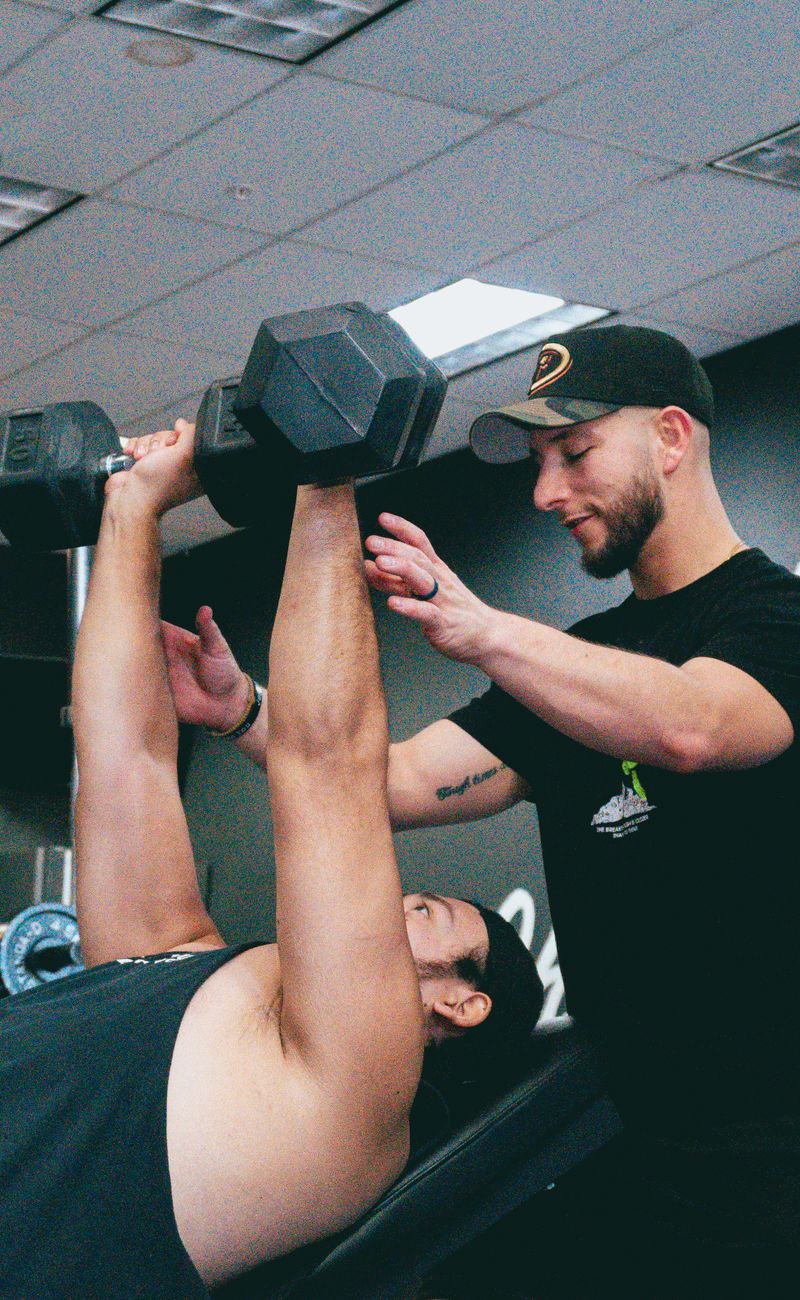
Dumbbell incline press offers a safer alternative for shoulder joint health. The independent range of motion allows your arms to find their natural path, which varies slightly between individuals. Barbell incline press allows heavier loading, which benefits strength development. Both variations belong in a complete chest training program. Alternate between them or dedicate different training phases to each.
Fixing the Common Incline Bench Press Mistakes
The most common incline bench press mistake is using too much incline angle. If you are pressing at 60 degrees or higher, you have turned your incline press into a seated military press on a bench. Your front delts do the work. Your chest gets almost nothing. Aim for 30 to 45 degrees maximum. Some lifters use an adjustable incline board and find their sweet spot at 35 degrees. Others need 40 degrees to feel proper chest loading. The exact angle matters less than staying within that functional range.
Another common mistake involves the bottom of the range. Some lifters lower the bar too far down their torso, often toward their belly button or lower sternum. This extended range of motion looks impressive but it puts your shoulder joint in compromised positions. Lower the bar to your upper chest, near the clavicle area, and press from there. Shorter range of motion with proper chest loading beats longer range of motion with poor form and minimal muscle engagement.
Failing to track progress kills more training programs than bad exercise selection. If you walk into the gym and pick a weight that feels about right, you are not training. You are moving weight. The difference matters because progressive overload requires specific, measurable overload applied consistently over time. Write your sets and weights down. Review your logbook weekly. Plan your next session's weights based on your previous performance. This is not complicated but most lifters skip it.
Excessive ego lifting sabotages incline bench press training. The incline press is more limited by mechanics than the flat press. Your one rep max will be lower. Accept that. Using weight you cannot control to impress nobody is a path to plateau and injury. Train with appropriate load. Complete all prescribed reps with good form. Add weight when you earn it. Your chest grows from consistent, properly loaded training over months and years, not from one ego-driven session that puts your shoulder at risk.
Neglecting the mind-muscle connection during incline pressing reduces its effectiveness. The incline bench press is a compound movement but that does not mean you should press with maximal velocity and zero awareness. Focus on squeezing your upper chest at the top of each repetition. Feel the muscle working as you press. This is not mysticism. This is neuromuscular efficiency. Your brain recruits more muscle fibers when you give it a reason to recruit them. Think about your upper chest contracting as you press. You will feel the difference in your next session.
Building Your Upper Chest Requires Strategy and Discipline
The incline bench press is not optional if you want complete chest development. Your upper chest fibers will not grow from flat bench pressing alone. Biomechanics does not negotiate. Add the incline variation to your program. Master the angle that targets your upper chest. Program it with appropriate frequency, volume, and progressive overload. Execute every set with proper form. Track your progress in your logbook. Repeat for months and years until your upper chest catches up with your mid chest and lower chest.
Most lifters who complain about underdeveloped upper chests are lifters who skip the incline work or do it incorrectly with excessive incline angles and no tracking system. That is a fixable problem. You have the information now. The question is whether you will apply it. Your training partners will notice the difference first. Your shirts will fit better. Eventually your mirror will confirm what your logbook has been telling you. Do the work. Build the upper chest you want. The incline bench press is the tool. Use it correctly.