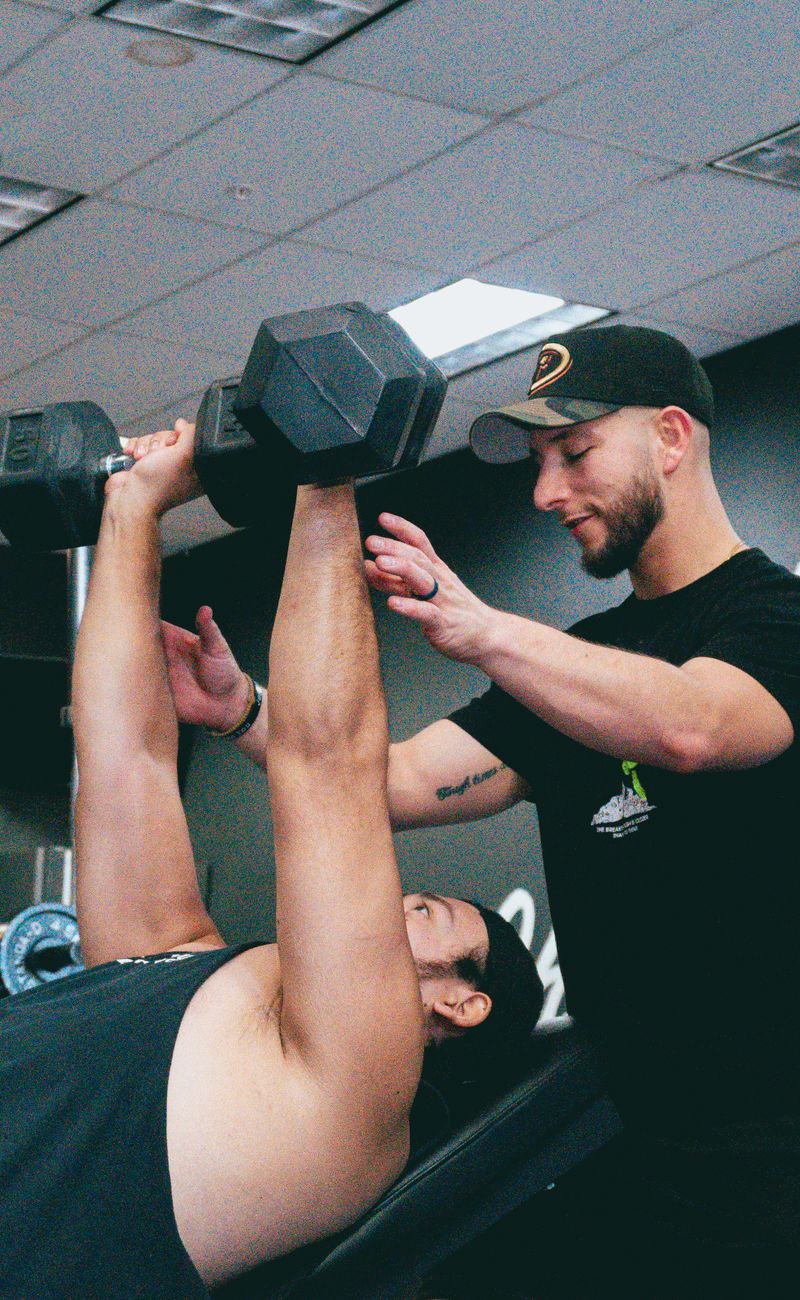
Best Overhead Press Programming: How to Build Massive Shoulders in 2026
Master the mechanics and volume requirements of the overhead press to maximize shoulder hypertrophy and strength through proven programming.

Understanding the Mechanics of Best Overhead Press Programming
Your shoulders are not growing because you are treating the overhead press like a secondary accessory. Most lifters treat the press as an afterthought, throwing in three sets of ten at the end of a chest workout and wondering why their deltoids look like pebbles. If you want boulders, you have to treat the overhead press with the same reverence as the bench press or the squat. The overhead press is a full body movement that demands stability from your core, rigidity in your glutes, and precision in your shoulder blade movement. When you look for the best overhead press programming, you are not just looking for a list of sets and reps. You are looking for a system that manages fatigue while forcing the anterior and lateral deltoids to adapt to increasing loads over time.
The primary mistake in most shoulder routines is the lack of specificity. You cannot simply do shoulder presses for a thousand reps and expect a linear increase in strength. You need a structured approach to volume and intensity. This means alternating between heavy strength phases and higher volume hypertrophy phases. If you stay in one rep range for too long, your progress will plateau. The body adapts quickly to a stimulus, and once that adaptation is complete, growth stops. To keep the gains coming, you must manipulate the variables of your training. This involves adjusting your total weekly sets, the intensity of each set, and the frequency with which you hit the movement. If you are only pressing once a week, you are leaving gains on the table. Two days a week is the gold standard for most natural lifters who want to maximize their shoulder development without burning out their central nervous system.
Form is the foundation of any successful program. If your form is garbage, your programming does not matter because you are just moving weight from point A to point B using momentum. You must grip the bar firmly, keep your elbows slightly tucked, and drive the bar in a straight line. Many people make the mistake of leaning too far back, which turns the movement into a standing incline bench press. This shifts the load away from the shoulders and onto the upper chest. While that might move more weight, it is not the goal here. The goal is shoulder hypertrophy. You need to engage your core and squeeze your glutes to create a stable platform for the press. Without a rigid base, you are leaking force. Every ounce of energy that is not directed upward is wasted energy. This is why the best overhead press programming emphasizes stability as much as it emphasizes the actual push.
Volume and Intensity for Maximum Shoulder Hypertrophy
Hypertrophy is driven by mechanical tension and metabolic stress. To achieve both, you need a mix of heavy loads and higher rep ranges. In a typical push day, the overhead press should be your primary compound movement. Start with a heavy set of five to eight reps to build the foundational strength. This is where you apply progressive overload. If you hit your rep target for all sets, you add weight in the next session. This is the religion of the logbook. If you are not tracking your weights, you are just exercising, not training. Once you have completed your heavy work, you transition into the hypertrophy range. This usually means sets of ten to fifteen reps. This increases the time under tension and drives blood into the muscle, creating the metabolic stress necessary for growth.
The concept of effective reps is critical here. The reps that actually drive growth are the ones closest to failure. If you are doing ten reps but could have done fifteen, those ten reps are essentially waste. You should aim to be one or two reps away from technical failure on every set. This means the last few reps should be a struggle, but your form must remain intact. If your form breaks down, the set is over. Pushing through bad form to get an extra rep is how you end up with a shoulder impingement. The best overhead press programming balances this need for intensity with the need for recovery. You cannot go to absolute failure on every single set every single workout. That is a recipe for systemic fatigue. Instead, use a RPE scale or a reps in reserve system to manage your effort. This allows you to push hard without crashing your nervous system.
Many lifters ignore the importance of the lateral deltoid. While the overhead press primarily targets the anterior deltoid, you need lateral raises to get that wide, capped look. However, the press is the engine that drives the overall mass. You should prioritize the press and use accessories to fill in the gaps. If you spend an hour on lateral raises and ten minutes on the press, your proportions will be off. The press builds the density and the raw power. The accessories provide the polish. A well structured program will place the heavy pressing first, followed by moderate volume pressing, and then finish with isolation work. This sequence ensures that you have the most energy for the most demanding movements, which is the only way to ensure long term progress.
Implementing Progressive Overload in Shoulder Training
Progressive overload is the only way to ensure you do not plateau. In the context of the overhead press, this does not always mean adding weight to the bar. While adding weight is the gold standard, there are other ways to progress. You can increase the number of reps with the same weight, decrease the rest intervals between sets, or improve the quality of your contractions. For example, if you cannot add five pounds to the bar, try to get one more rep on your final set. Once you have added that rep to all your sets, then you add the weight. This incremental approach prevents the sudden jumps in load that often lead to injury or failure.
Periodization is the strategic application of this overload. You cannot push for a new personal record every single week indefinitely. Eventually, you will hit a wall. This is where a deload week becomes essential. Every four to six weeks, you should reduce your volume and intensity by about thirty to fifty percent. This allows your joints and nervous system to recover while still maintaining the skill of the movement. Many lifters view deloads as a waste of time, but they are actually the secret to long term growth. By stepping back for one week, you prime your body to push even harder in the next block. This is how professional athletes and experienced lifters maintain progress for years rather than months.
The best overhead press programming often utilizes a wave periodization model. This means you might have a heavy week, a moderate week, and a light week, and then repeat the cycle with slightly higher weights. This prevents the mental and physical burnout associated with linear progression. It also allows you to target different muscle fibers. The heavy weeks recruit high threshold motor units, while the light weeks focus on sarcoplasmic hypertrophy and blood flow. By rotating these intensities, you attack the muscle from multiple angles, ensuring that no single adaptation path is exhausted. This is the difference between a random workout and a calculated program.
Common Pitfalls and How to Fix Them
One of the most common mistakes is neglecting the mobility of the thoracic spine. If your upper back is stiff, you cannot achieve the proper angle for the overhead press. This forces your lower back to arch excessively to compensate, which can lead to lumbar injury. To fix this, you must incorporate thoracic mobility work into your warm up. Simple movements like cat cow or thoracic rotations can open up your chest and allow the bar to travel in a more efficient path. If you cannot get your arms fully overhead without arching your back, you are not ready to press heavy weights. Fix the mobility first, then apply the load.
Another common error is the lack of consistency in bar path. The bar should move in a vertical line as much as possible. Many people push the bar out in front of them, creating a long lever arm that puts unnecessary stress on the shoulder joint. This is often a result of not tucking the chin or not keeping the bar close to the face. Think about pressing the bar around your face rather than pushing it away. This small adjustment significantly changes the mechanics of the lift and allows you to move more weight with less joint stress. If you are unsure of your bar path, record your sets from a side profile. You will likely see the bar drifting forward, and correcting this is the fastest way to increase your strength.
Finally, stop changing your exercises every two weeks. The trend of muscle confusion is a myth. Your muscles do not get confused; they get adapted. If you switch from a barbell press to a dumbbell press to a machine press every session, you cannot track your progress. You need to pick a primary movement and stick with it for at least eight to twelve weeks. This allows you to build a neurological connection with the movement and actually apply progressive overload. The best overhead press programming is boring because it relies on the repetition of the same movements with increasing intensity. Embrace the boredom. The results come from the consistency of the effort, not the variety of the exercises.
If you want to maximize your shoulders, you must stop guessing. Stop following a random list of exercises you found on a social media feed. Start a training log, pick a structured program, and commit to the process. The overhead press is a grueling lift that demands everything from you, but the reward is a powerful, imposing physique. There are no shortcuts to this process. There is only the weight, the logbook, and the relentless pursuit of one more rep. If you are not struggling at the end of your sets, you are not growing. If you are not tracking your sets, you are not training. Get under the bar and do the work.