The Pull-Up Paradox: Why You Cannot Do One and How to Fix It
Struggling with your first pull-up? Stop doing random lat pulldowns. Here is the specific progression to go from zero to your first clean rep.
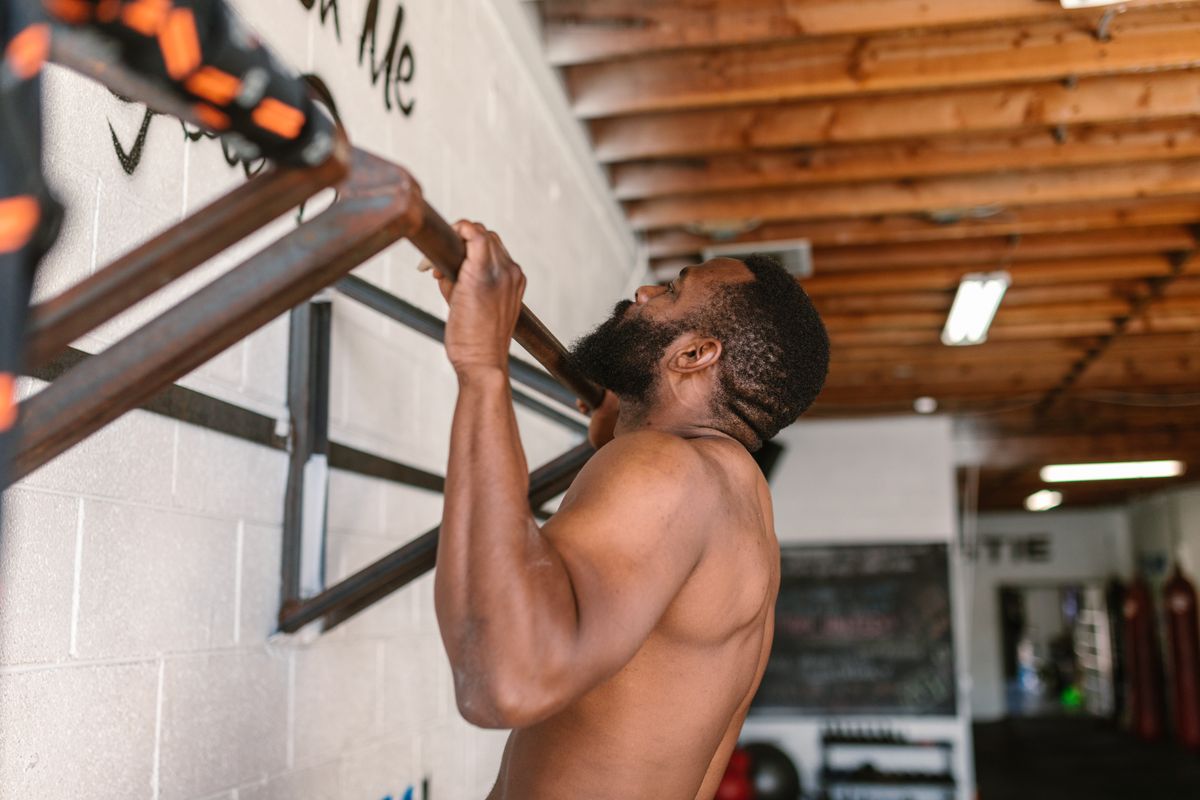
The pull-up is the ultimate test of relative strength. If you can pull your own body weight to a bar, you have a baseline of upper body power that commands respect. But for many, the first rep is an impenetrable wall. You try, you struggle, you shake, and you end up six inches below the bar.
The paradox is that most people try to "get strong enough" to do a pull-up by doing exercises that do not actually translate to the movement. They spend hours on the lat pulldown machine, thinking that pulling 150 pounds on a cable is the same as pulling 180 pounds of dead weight against gravity. It is not. The stabilizer requirements, the core tension, and the specific shoulder activation of a pull-up are entirely different from a seated cable machine.
The Lat Pulldown Lie
Do not get me wrong, the lat pulldown is a useful tool for hypertrophy. But if your goal is a pull-up, the pulldown is a secondary exercise. The reason is simple: the pulldown allows you to isolate the lats while your lower body is locked under a pad. In a pull-up, your entire body must work as a single unit. Your core must be rigid, your glutes must be engaged, and your scapula must be fully depressed before the arms even start to pull.
Most beginners fail not because their lats are too weak, but because they cannot coordinate the movement. They "arm" the pull-up, trying to pull with their biceps instead of initiating the movement from the shoulders. This leads to immediate fatigue and a failure to reach the bar. If you want a pull-up, you need to train the pull-up pattern, not just "back strength."
The Progression Protocol
You cannot jump from zero to one. You must build a bridge of progressive overload. This is where most people fail by using a band that is too thick, effectively removing 80 percent of the load and teaching the body a different movement pattern.
First, master the Scapular Pull. Hang from the bar. Without bending your arms, pull your shoulder blades down and back. Hold for two seconds. This is the "unlock" for the entire movement. If you cannot control your scapula, you will never have a clean pull-up.
Next, move to Negatives. This is the most powerful tool in your arsenal. Jump up so your chin is above the bar. Now, fight the descent. Your goal is to take five full seconds to reach a dead hang. The eccentric phase of a movement is where you are strongest and where the most adaptation occurs. Once you can control a five second negative, you are very close to a full rep.
Finally, use Inverted Rows. Find a bar at waist height and pull your chest to it while keeping your body in a straight line. This builds the horizontal pulling strength and the core stability required to prevent swinging during a vertical pull.
Consistency Over Intensity
Stop trying to "max out" your pull-up attempts every session. If you can't do one, trying to do one ten times in a row is just a waste of energy. Instead, focus on the quality of your negatives and the precision of your scapular pulls.
Program these progressions three times a week. Focus on the slow, controlled descent. When you finally hit that first rep, it will not be because of a miracle. It will be because you systematically removed the weaknesses in your chain. Stop guessing and start following the protocol.