How to Build Grip Strength for Pull-Ups: Complete Training Guide (2026)
Discover the best grip strength exercises and training methods to master pull-ups, improve your pullmaxx performance, and build unstoppable pulling power.
Your Grip Is the Only Thing Holding You Back From More Pull-Ups
If you can do five pull-ups and then your arms fail, your lats are not the problem. Your grip is. Every single time. You have been training your back, your biceps, your core, all while leaving the single point of failure completely untrained. That ends now. Building grip strength for pull-ups is not optional if you want to progress past the intermediate range. It is the limiting factor that most trainees ignore until it costs them reps, sets, and eventually plates on the bar.
Most pull-up programming treats grip as an afterthought. They tell you to just hang from the bar and do sets when you feel like it. That approach works until it stops working, which happens around the 8-12 rep range for most natural lifters. If your goal is 15, 20, or more pull-ups, you need a dedicated grip training protocol. This guide is that protocol.
Understanding Why Grip Strength Determines Your Pull-Up Ceiling
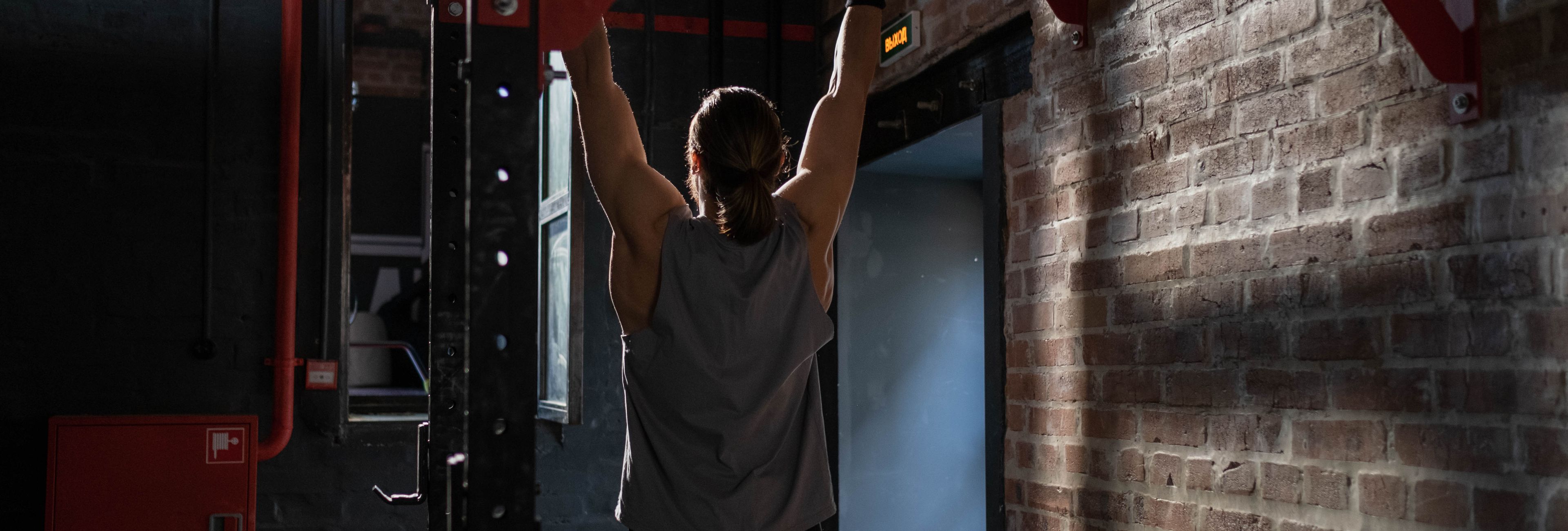
The dead hang is the foundation of every single pull-up rep you have ever done. Your lat engages, your bicep fires, your core braces, but all of that force transmission depends on one thing: your ability to hold onto the bar. The moment your grip fails, the rep is over regardless of how much strength remains in your target muscles. This is why grip endurance has a logarithmic effect on your total rep count. Going from a 15-second grip endurance to a 25-second grip endurance does not add 10 seconds to your workout. It adds multiple sets worth of reps across a training session.
There are two distinct types of grip that matter for pull-ups. Crushing grip is the maximum force your hand can apply to the bar. Support grip is your ability to maintain that hold over time. For pull-ups, support grip is the limiting factor for 90 percent of trainees. You can crush the bar hard enough to lift yourself on the first rep. You cannot maintain that crushing force for the twentieth rep without specific training. This distinction matters because most grip training advice focuses on crushing movements when what pull-ups actually require is support grip endurance.
The bar itself creates a feedback loop that makes grip fatigue compound faster than you expect. Every rep you do with slightly degraded grip form teaches your nervous system that the position is acceptable. By rep twelve, you are compensatng with shoulder elevation, engaging your traps instead of your lats, and burning out your forearms faster than necessary. Training your grip directly breaks this cycle before it starts.
Anatomy of the Grip: What You Are Actually Training
Your forearm flexor muscles are the primary drivers of grip strength in the hanging position. The flexor digitorum profundus runs along the inside of your forearm and attaches to each finger. This muscle does one thing: it closes your fingers. When you hang from a bar, it is the primary muscle preventing your fingers from opening. Building capacity in this muscle is the foundation of grip training for pull-ups, and most trainees have never directly trained it outside of hanging.
The thenar muscles around your thumb create the other critical connection point. Your thumb opposition strength determines how securely you can lock into the bar. A hook grip, where your thumb wraps over your index finger, dramatically increases security but requires specific training to make comfortable. Most trainees never explore this grip variation and lose significant holding power as a result.
Finger extensor balance matters almost as much as finger flexor strength. If you only train grip in the closed position without training the extensors, you create a muscular imbalance that leads to forearm fatigue and eventually joint issues. Five minutes of finger spreads at the end of your grip session prevents this. It takes thirty seconds. Nobody skips it who knows about it.
Wrist position affects grip endurance more than most people realize. A slight wrist extension creates a biomechanical advantage that reduces forearm fatigue. A fully neutral or flexed wrist position forces your flexors to work harder against gravity. Experiment with your wrist angle during hangs to find the position that lets you hold longest, then train that position consistently.
Progressive Grip Training: The System That Actually Builds Endurance
Dead hangs are the foundation, but random hanging is not a training system. You need progressive overload for grip just like you need it for every other muscle. The protocol that works is simple: find your current maximum hang time, then structure your training around that number. If you can hang for 20 seconds before your grip breaks, your training set is 15 seconds. Your working sets are at 75 percent of maximum. Three to five sets per session, three sessions per week, with 90 seconds rest between sets.
Progress every two weeks by adding 5 seconds to your training duration. When you can comfortably hold 30 seconds for five sets, increase to 35 seconds. This linear progression sounds slow but it works because grip adaptation happens slowly. Trying to progress faster leads to overuse injuries in the finger joints and forearm tendons that will shut down your training for weeks. Patience is not optional here. It is the protocol.
Fatigued hangs after your pull-up sets accelerate grip development faster than fresh hangs alone. After your last set of pull-ups, stay on the bar and hold until failure. This trains grip endurance in the exact context where you need it. Your body learns to maintain grip under the metabolic stress of repeated pulling, which is the specific adaptation you are chasing.
Single arm hangs progress your grip asymmetry if you have a dominant side. Hold with one arm for time, matching the other side. When you can hold equal time with both arms, increase duration. This corrects imbalances that cost you reps and train the stabilization demands that make bar work harder than machine work.
Fat grip training, where you thicken the bar diameter with Fat Gripz or wrapped towels, forces your forearm flexors to work harder with the same load. Doing your pull-ups with a thickened bar for the last set of your working sets builds grip capacity without requiring separate training time. This is the most efficient method for trainees who are short on time.
Accessory Work That Directly Improves Your Pull-Up Grip
Farmer carries build support grip endurance better than any other exercise. Hold heavy dumbbells at your sides and walk. Start with 40 seconds of walking, rest 60 seconds, repeat for four sets. The time under tension and the stabilization demand transfer directly to bar hanging. This exercise also trains your core and your posture under load, which improves every pull-up rep you do.
Wrist roller work targets the forearm flexors through a full range of motion with eccentric loading. Attach a weight to a rope on a dowel, roll the weight up by rotating your wrists, then roll it back down slowly. The eccentric portion builds capacity that translates to longer hangs. Do this at the end of your pulling sessions for three sets of rolling up and down.
Reverse wrist curls with a barbell train the extensor muscles that balance your flexors. Heavier people need heavier weights here, not lighter. If you weigh 200 pounds and do reverse wrist curls with 25 pounds, you are undertraining the movement relative to your demands. Work up to sets with 50-80 pounds over six to eight weeks of consistent training. This sounds excessive until you realize how much force your forearms manage during a full set of pull-ups.
Plate pinches where you hold two plates together by their smooth sides build thumb and finger integration that a bar cannot replicate. Hold the pinch for time rather than doing reps. When you can hold a 45-pound total pinch for 30 seconds, you have more than enough grip for any pull-up goal. This exercise exposes weaknesses that bar work hides because the plate edges are rougher and less consistent than a bar.
Programming Your Grip Training Around Your Pull-Up Work
Separate your grip training from your heavy pulling days for best results. If you train pull-ups on Monday, Wednesday, and Friday, put your dedicated grip work on Tuesday, Thursday, and Saturday. This gives your finger flexors 48 hours to recover between heavy demands. Training grip the same day as your heaviest pulling creates cumulative fatigue that degrades both sessions.
During a strength block where you are doing sets of 3-5 pull-ups with heavy loads, keep your grip work at maintenance level. Two sessions per week, moderate duration, just enough to maintain what you have. Your grip will not improve much during this phase but it will not degrade. The pull-up work itself maintains most of your grip function.
During a hypertrophy block where you are doing sets of 8-12 pull-ups, push your grip training harder. This is where you build the endurance base that will carry you through high rep sets. Add a third grip session if you have room. Increase your hang duration by 10 seconds per week instead of 5. The metabolic stress of higher rep pulling creates adaptation opportunity for grip that you should not waste.
During a peaking phase where you are testing max reps, reduce grip training to one session per week and keep volumes low. You want your grip system fresh for test day. Any residual fatigue in your finger flexors will cost you two to three reps on a max attempt, which can mean failing to hit a goal you have worked months toward.
Consider deload weeks for grip training when you deload your pulling. Reduce grip volume by 50 percent during any week where you are cutting your pulling volume in half. Your finger joints and tendons adapt more slowly than muscle tissue, so they need extra recovery time during load reduction. This is where most trainees get injured. They maintain heavy grip training through a deload week for their major lifts, then wonder why they have tendon pain two weeks later.
The Bottom Line That Nobody Wants to Hear
You have been training your back, your biceps, and your core to build a better pull-up while ignoring the single system that determines whether you can complete the rep. If you are stuck below 12 pull-ups and your limiting factor is not technique, it is grip. Full stop. You can add 5 pounds to your bench press for months and never close the gap if your grip is the ceiling.
Buy a pair of Fat Gripz or find a thick pipe to wrap a towel around. Start hanging for time. Program it three days per week. Progress by 5 seconds every two weeks. Do your reverse wrist curls and your farmer carries. Track your progress in your logbook because grip training gains are easy to lose track of if you do not measure them.
In eight weeks, you will hold the bar longer than you ever have and your pull-up rep count will reflect that improvement. In sixteen weeks, you will wonder why you ever thought your lats were the problem. The people who can do 20+ pull-ups did not build better backs. They built better grips.