Best Back Exercises for Mass: The PullMaxx Hypertrophy Guide (2026)
A comprehensive guide to the most effective back exercises for building maximum muscle mass, covering pull-ups, rows, and cable movements for complete lat and trap development.

Your Back Is Not Growing Because You Are Training It Like Everyone Else
The back is the largest muscle group in your upper body. It spans from your traps down to your lumbar spine, wraps around your sides, and is responsible for the V-taper that separates a impressive physique from a mediocre one. Yet most lifters treat back training as an afterthought. They hit chest three times a week, knock out a few pulldowns at the end of their session, and wonder why their back looks like a wall. You cannot build a big back with five sets of lat pulldowns and a prayer. You need a systematic approach to back exercises for mass that prioritizes mechanical tension, progressive overload, and intelligent exercise selection. This guide is that system.
Building a massive back requires understanding that the back is not one muscle. It is a complex system that includes the latissimus dorsi, rhomboids, middle and lower trapezius, teres major and minor, rear delts, and the entire spinal erector chain. Each of these tissues responds differently to training stimulus. A program that only hits lats will leave you with wide but flat wings. A program that only pulls heavy will leave you with a thick middle back but underdeveloped width. You need both. You need heavy compounds and targeted isolation. You need to think in terms of total back development, not just the muscles you can see in the mirror.
The science is clear on what drives muscular hypertrophy in the back. Mechanical tension is the primary driver. You need to load the target tissues under significant tension for extended time under tension. This means no floating through sets while your form falls apart. It means logging your weights, tracking your reps, and fighting for every extra rep you can squeeze out over weeks and months. Volume matters. Research consistently shows that sets totaling somewhere between ten and twenty working sets per week per muscle group produce optimal hypertrophy for most natural lifters. Frequency matters. Spreading that volume across two or three sessions rather than dumping it all into one brutal Sunday session leads to better growth. And recovery matters. Your back does not grow in the gym. It grows when you sleep and eat with enough consistency to allow tissue repair and remodeling.
The Foundation Movements: Where Mass Is Built
If you want a back that fills out a shirt, you need to prioritize compound pulling movements. These exercises allow you to load the most weight, recruit the most muscle fibers, and generate the highest mechanical tension on the tissues responsible for back thickness and width. Everything else you do in your back workout should serve to amplify what you build with these movements.
The barbell bent over row is the single most effective exercise for building back thickness. Done correctly, it hits your lats, rhomboids, middle back, rear delts, and even your biceps simultaneously. The key word is correctly. Most lifters row with too much arm and not enough back. They jerk the weight up using momentum, round their shoulders forward, and wonder why their biceps give out before their back feels anything. To row for mass, you need to think about pulling with your elbows, not your hands. Squeeze your shoulder blades together and down at the top of every rep. Keep your torso at roughly forty-five degrees relative to the floor, not bent forward to parallel. Drive your chest up and maintain a slight natural arch in your lower back. The weight should move because your back is pulling it, not because your arms are yanking it. Start with a weight you can control for five clean reps and build from there.
The deadlift is not just a leg and lower back exercise. The conventional deadlift with a double overhand grip and conventional stance recruits your lats, traps, rhomboids, and spinal erectors in a way that no other movement can replicate. The lockout phase, where you finish standing with the weight, requires your upper back to fight against gravity with extreme force. This builds resilience and density in your posterior chain that transfers to every other pulling movement. Do not skip deadlifts because you think they are a leg exercise. They are a total body exercise that builds total body mass. If your deadlift is weak, your back will be weak. If your deadlift is strong, your back has a foundation to build from.
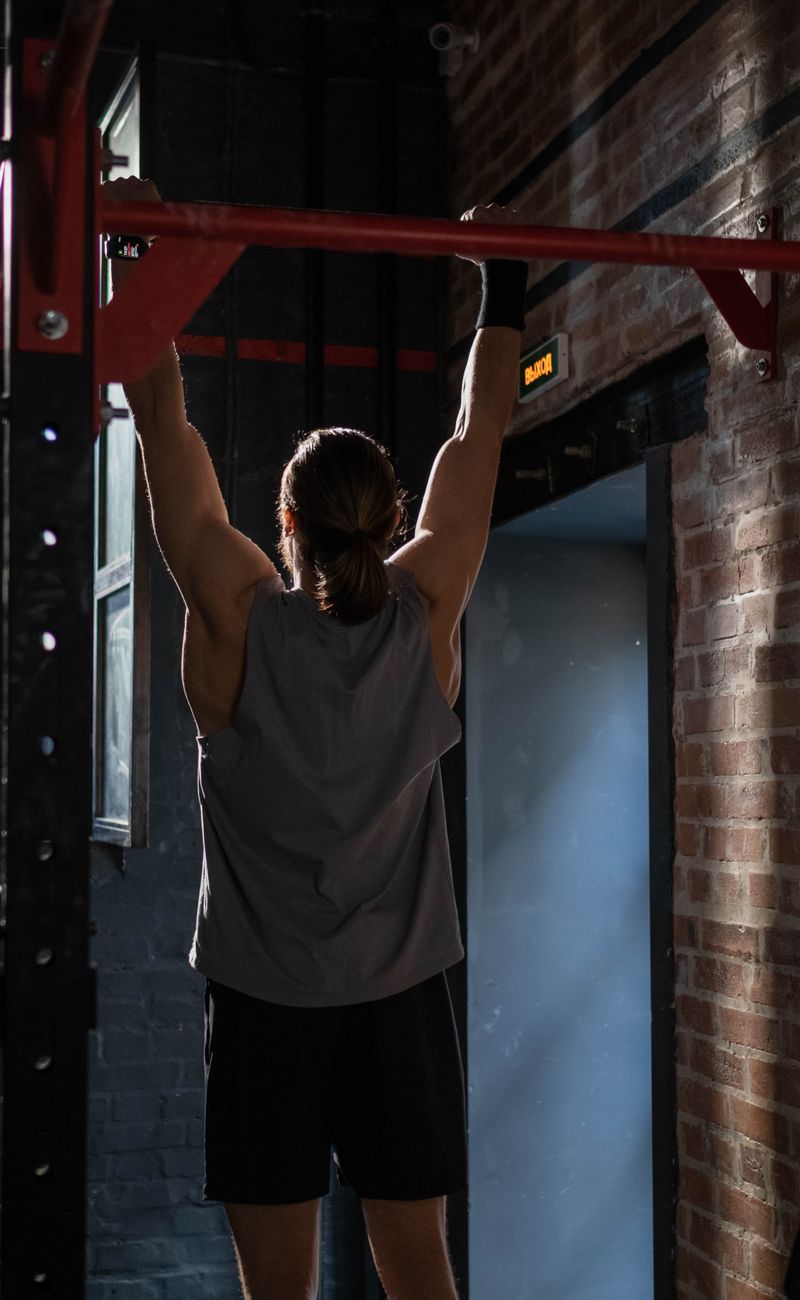
Pulldowns and pull-ups both have a place in a mass building program. The key difference is that pulldowns allow you to control the eccentric more precisely and target the lat peak with a slightly forward lean, while pull-ups build more total back engagement including the lower lats and core stability from hanging. Alternate between them based on your programming. Some weeks do pulldowns first for your heavy sets. Some weeks do pull-ups first when you are fresh. The variation prevents adaptation and keeps the muscles responding to the training stimulus. When you can do weighted pull-ups with thirty percent of your bodyweight added for eight clean reps, your back will look like it belongs on a bodybuilder's stage.
The Rowing Variations: Building the Middle Back and Thickness
Width exercises create the silhouette. Thickness exercises create the depth. Without thickness, a wide back looks like a flat board. With thickness but no width, you look like a middle-aged man who works at a desk. You need both. The rowing family of exercises builds the middle back, the rhomboids, and the outer lats in ways that pulldowns cannot replicate. If you only do one rowing variation, you are leaving gains on the table.
The dumbbell row is the most accessible and versatile rowing variation. You can set your bench to an incline and support your weight with one hand, which allows your working lat to stretch fully at the bottom and contract maximally at the top. This extended range of motion creates more muscle damage and metabolic stress than a cable row, both of which contribute to hypertrophy. Focus on pulling the dumbbell toward your hip bone, not your chest. Your elbow should travel close to your body. At the top of the rep, squeeze your lat hard and hold for a full second before lowering under control. Do not drop the weight. Eccentric control matters for growth.
Seated cable rows with a close grip handle build the inner lats and the middle back region that creates the illusion of a tighter waist. The key to maximizing this movement is to sit with a slight forward lean and pull the handle to your lower sternum, not your belly button. The more vertical your torso, the more you involve your lats. The more you lean forward, the more you involve your spinal erectors and rhomboids. Both are valuable. Change your torso angle based on what you want to target. Some sets pull to the sternum with a vertical torso. Some sets pull to the belly with a thirty-degree forward lean. This variety ensures you are hitting the back from multiple angles throughout the week.
The chest supported row removes momentum and forces your back to do all the work. By bracing your chest against a pad, you eliminate the hip hinge that allows lifters to cheat reps. This makes every single rep harder, which means your muscles have to work harder, which means they have to adapt and grow. If you have been floating through rows while standing, the chest supported variation will show you what genuine back training feels like. You will probably drop the weight by twenty percent initially. That is fine. The quality of the stimulus is what matters, not the number on the bar.
Programming Your Back Exercises for Mass: The Structure That Works
Exercise selection is only half the battle. How you arrange those exercises, how much volume you do, and how frequently you hit the back determines whether you build muscle or just burn calories. The back responds well to moderate frequency. Two sessions per week is the minimum for meaningful growth. Three is better if you can recover from it. Most lifters who complain about poor back development are training their back once a week and wondering why progress is slow.
Within each session, organize your movements from heavy to light and from compound to isolation. Start with your heaviest lifts when your nervous system is fresh and you can generate maximum force. A sample structure might look like this: heavy barbell rows first, then deadlifts or rack pulls if your session is focused on thickness, then pulldowns or pull-ups for lat width, then a dumbbell row variation for unilateral work, and finish with a rear delt exercise to address the often-neglected posterior shoulder. This ordering ensures the muscles that matter most get hit when you are strongest, and the secondary muscles get what they need without being buried by fatigue.
Set and rep schemes depend on your goals and your current training age. For pure hypertrophy, most of your working sets should fall in the five to twelve rep range. This is where you get enough mechanical tension to stimulate growth while maintaining enough time under tension to create metabolic stress. Your heavy compounds can stay in the four to six rep range if your goal is strength and you want to build a foundation. Your isolation work can drift toward twelve to fifteen reps where time under tension peaks. Avoid staying in the fifteen to twenty rep range for heavy compounds because you lose the tension stimulus that drives growth.
Progressive overload is not optional. It is the only way your back will grow over time. Progressive overload means adding weight, adding reps, or adding sets over time while maintaining technique. If you are doing the same weight for the same reps in the same exercises week after week, you are not training for growth. You are maintaining what you have. Log everything. Write down your sets, reps, and weights. Review your log every four weeks and identify where you can push harder. If you benched one hundred seventy-five pounds for five sets of five last month and you are still benching one hundred seventy-five pounds for five sets of five this month, you have not trained. You have just moved weight around.
The Mistakes That Keep Your Back Small
Most lifters do not have a back problem. They have a priority problem. They put chest first, shoulders first, arms first, and wonder why their back never catches up. The back is a large muscle group that recovers slowly. It needs to be prioritized. If you do back first in your split, when you have the most energy and focus, your back will grow. If you do back after a long session of pressing and your shoulders are fried, your back will get what is left over, which is not enough.
Another common mistake is using too much weight with too little control. Ego lifting on back exercises is epidemic. You see people loading the lat pulldown with two hundred twenty pounds, jerking it down with momentum, and barely moving the weight six inches. This does nothing for your lats. It trains your ego. If the weight does not move smoothly through a full range of motion, the weight is too heavy. Reduce the load, control the eccentric, and feel your back working. The muscle does not know what the bar weighs. It only knows the tension you create on it.
Finally, many lifters neglect the lower back and spinal erectors. A thick back requires strong erectors. Without them, you have a wide but soft back that looks like a slab of meat rather than a wall of muscle. Good mornings, back extensions, reverse hyperextensions, and heavy partial deadlifts from a rack all build the lower back tissue that creates that three-dimensional thickness when viewed from the side. Do not skip this area because it is not visible from the front. Judges at bodybuilding shows look from all angles.
Your back will not build itself. It requires intelligent exercise selection, consistent effort, and the willingness to prioritize it above the muscles that show off in the mirror. Start with the compound movements. Add the targeted variations. Log your progress. Do not skip sessions. Do not skip deadlifts. Do not ego lift. The principles have not changed. The only variable is whether you actually apply them to your training or just read about them and move on.