Gym Anxiety: How to Build Confidence at the Weight Room (2026)
Gym anxiety stops countless lifters from reaching their potential. Learn the proven psychological techniques elite athletes use to build unshakeable confidence and eliminate fear of the weight room.
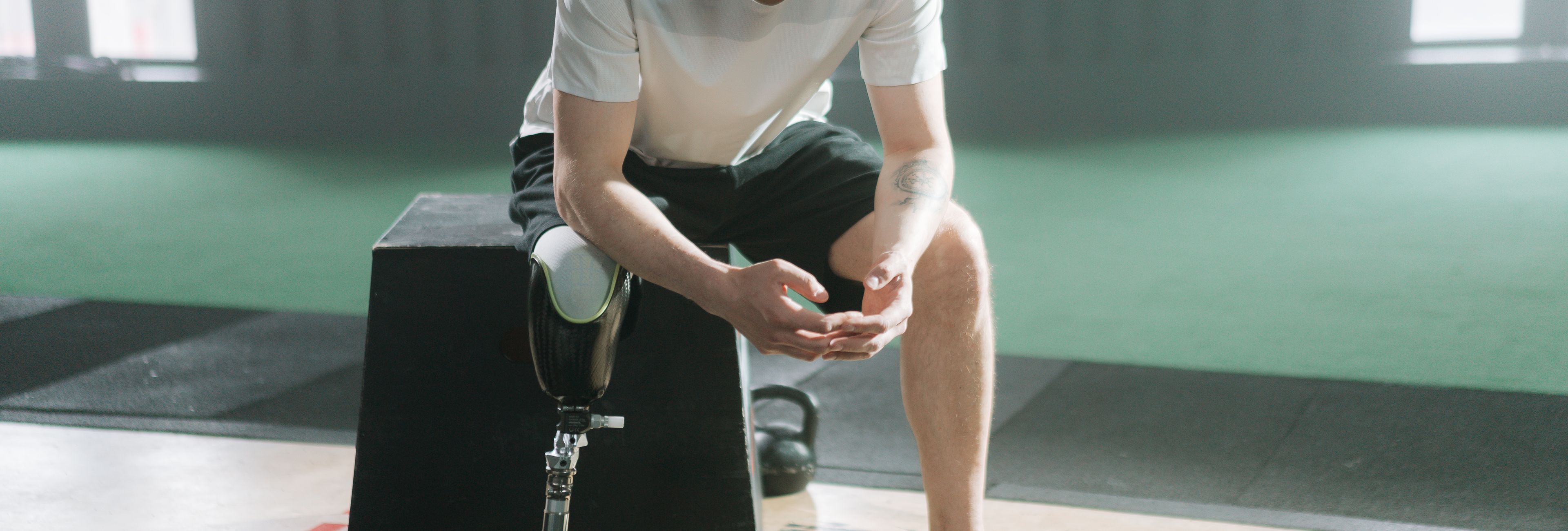
Nobody Who Actually Lifts Gives a Damn About You
Gym anxiety is real. You walk into a commercial gym and feel the weight of judgment from every direction. The guy with the big shoulders stares at you. The girl deadlifting more than you squat seems to notice your empty bar. Your brain tells you that everyone is measuring you against some invisible standard you will never meet. Here is the truth nobody tells you: the people in that gym are thinking about themselves. They are counting their own reps. They are grinding through their own sets. You are a background character in their training session, just like they are in yours. This is not permission to ignore the anxiety. This is permission to understand that the anxiety is mostly fiction. It lives in your head. It has no weight to it. And you can learn to set it down.
Why Your Brain Treats the Weight Room Like a Threat Response
Your anxiety in the gym is not weakness. It is biology. The human nervous system evolved to scan unfamiliar environments for danger. When you enter a space where you do not feel competent, your amygdala fires off warning signals. Elevated heart rate. Sweaty palms. Tight chest. Your body thinks it needs to fight or flee from something. The irony is that the threat response does not make you want to fight through a heavy set of back squats. It makes you want to leave. This is why anxiety often spikes during the moments you feel most exposed, like when you are setting up for a lift or adjusting equipment between sets.
Understanding this mechanism is the first tool in your kit. You are not broken. You are not lacking discipline. Your nervous system is doing exactly what it evolved to do. The problem is that it is applying a survival response to a context that does not require survival. The weight room is safe. The people are not predators. The plates are not threats. Your body has not caught up to this reality yet. The solution is not to force yourself to ignore the anxiety. The solution is to change the relationship between your nervous system and the gym environment. You do that through competence, repetition, and preparation. Not through willpower.
Show Up Before You Are Ready
The worst advice anyone gives about gym anxiety is to wait until you feel ready. You will never feel ready. Confidence is not a prerequisite for action. It is a result of action. You do not walk into the gym because you feel confident. You walk into the gym because you want to feel confident. The distinction sounds subtle but it changes everything. If you wait until confidence arrives before you take action, you will be waiting a very long time. The person who shows up nervous and trains anyway is building something the person who stays home does not have access to.
This is the counterintuitive reality of gym confidence: the anxiety does not go away first. You go away first. You show up. You perform the movement pattern. You complete the set. Over time and repetitions, your nervous system recalibrates. The gym becomes a known environment. The movements become familiar. The social context becomes normalized. You do not think about whether people are watching you anymore because you are too focused on your sets, your recovery time, your next exercise. The anxiety does not disappear. It gets crowded out by competence and focus.
Master the Setup Before You Master the Movement
One of the fastest ways to destroy gym confidence is to walk into a weight room with no plan. You look at the equipment and realize you do not know where to start. You feel lost. You look around for guidance. You feel the clock ticking and the other members moving with purpose while you stand there like a deer in headlights. This is not a character defect. It is a preparation deficit. And it is fixable.
Before you ever step into the weight room, you should know three things with certainty: what exercise you are doing, what weight you are using, and what the next exercise in your sequence will be. Write it down. Put it in your phone. Follow it. When you walk into the gym with a plan, you walk in with direction. You know exactly where your feet will go, which rack you will use, how many plates you need to load, and what your rest interval will be. This sounds like a small thing. It is not. It eliminates the cognitive overhead that feeds anxiety. You are not wondering what to do next. You are just executing.
There is a secondary benefit to this approach that most people overlook. When you have a plan and you execute it, you build trust with yourself. You make a commitment to a set of actions and you follow through. This matters because gym anxiety often stems from a deeper distrust of your own ability to handle the situation. You are not sure you belong in that space. A plan tells your nervous system: I have thought this through. I have prepared. I can handle this. The act of preparation is itself a confidence-building exercise.
Start Where You Are, Not Where You Think You Should Be
The pressure to perform at a certain level is one of the primary drivers of gym anxiety. You compare yourself to people who have been training for years and wonder why you cannot match their numbers. You see a lifter with a loaded bar doing sets you cannot yet handle and feel ashamed of your empty bar. You worry that people will judge you for not being further along. You might even be embarrassed to ask for a spot or to admit that you need to start with a lighter weight. This is the fastest path to quitting before you begin.
Every strong lifter you see in the gym started with a bar that felt heavy. They all had a first day. They all had a first set they were embarrassed about. The difference between those who kept going and those who quit is not talent. It is the willingness to be bad at something in public while they get better. There is no shame in a lighter weight. There is no shame in a slower progression. There is only the decision to show up and do the work with whatever capacity you have today.
This is where your logbook becomes your most valuable tool. When you record your sets, your reps, and your weights, you create a record of your progression. You can look back and see where you started. You can see the small wins accumulating over time. This shifts your identity from someone who is not good enough yet to someone who is building. The trajectory matters more than the current position. Your logbook proves that trajectory every time you open it.
Control Your Breath Before You Control the Bar
Breathing is the most underrated tool in managing gym anxiety. When your nervous system detects a threat, whether real or perceived, your breathing becomes shallow and fast. This feeds the anxiety loop. Your heart rate increases. Your muscles feel tight. Your performance suffers. You interpret the poor performance as evidence that you do not belong, which increases the anxiety, which worsens the next set. The cycle continues until you break it.
The fix is deliberate breathing before you lift. Before each set, take three to five deep breaths. Inhale through your nose, exhale through your mouth. Fill your belly with air, not just your chest. This activates your parasympathetic nervous system and tells your body that the environment is safe. You are not in danger. There is nothing to flee from. You are simply picking up a weight and putting it back down. This sounds almost too simple to work. It works. The research on respiratory sinus arrhythmia and anxiety reduction is clear. Breathing is not a magic cure. It is a tool that you use consistently to manage the physiological response that fuels your anxiety.
Once you have established a breathing routine, you can layer it into your training. Use it before you unrack the bar. Use it between sets. Use it when you feel your anxiety spiking between exercises. The goal is not to eliminate the anxiety. The goal is to prevent it from controlling your behavior. You can feel nervous and still complete your set. You can feel anxious and still execute your program. Breathing buys you the seconds you need to make a decision instead of reacting to a feeling.
Build a Ritual, Not Just a Routine
A routine is something you do. A ritual is something you are. The difference matters when you are trying to build long-term gym confidence. If you show up to the gym three days a week because you told yourself you should, you are operating on discipline and discipline runs out. If you show up because the gym is part of your identity, because the weight room is where you process stress, because the act of training has become woven into who you are, you show up regardless of how you feel. That is the level of commitment you need to build real confidence.
Rituals are built through repetition and consistency. They are built through the small decisions you make every time you train. You walk in at a specific time. You set up at the same rack. You start with the same warm-up sequence. You play the same playlist if that is your thing. You log your sets in the same manner. These patterns signal to your nervous system that the gym is a known environment. It is your space. You belong there. When the ritual is strong enough, showing up becomes automatic. You do not have to talk yourself into it. You just go.
The ritual also serves a social function you might not have considered. When you look like you know what you are doing, people are less likely to interact with you in ways that make you uncomfortable. This is not about playing a role. It is about competence projecting its own presence. If you walk in with a clear plan, set up efficiently, and move through your sets with focus, you look like you belong. That visual signal changes how people perceive you and how you perceive yourself. It reinforces the identity of someone who trains. Someone who belongs in the weight room.
The Truth About Judgment
You are going to mess up your form at some point. You are going to rerack the wrong weight. You are going to take a rest day when someone is watching. You are going to have a set where nothing goes right. These moments feel catastrophic when they happen. They feel like everyone noticed. They feel like you exposed yourself as a fraud. Here is what actually happens in those moments: some people did not notice at all. Some people noticed and forgot immediately. A small number noticed and will not remember five minutes from now. None of them care. You are the only one holding onto the moment and replaying it in your head.
This is not a license to ignore your form or to disregard safety. It is permission to stop treating every mistake as a referendum on your worth as a lifter. You are learning. You are building. Mistakes are part of the process. The lifter who has been training for ten years makes form corrections in every session. Nobody arrives at perfect technique and stays there forever. The people who seem to have it all figured out are just further along in their own learning curve. You will get there. The only path is through consistent practice, which includes making and correcting mistakes along the way.
Your Next Session Starts Now
Gym anxiety will not be resolved in a single session. It will not disappear the first time you complete your program without incident. It fades through accumulation. Each time you show up and execute, you add to a running total of evidence that the gym is safe, that you are capable, that you belong. The anxiety does not evaporate. It becomes background noise. You learn to work through it. You learn to notice it and proceed anyway. That is the skill you are building. Not just stronger muscles. Not just better numbers. The ability to function under the pressure of your own nervousness and still get the work done.
Tomorrow, you go to the gym. You do not go because you feel ready. You go because readiness is not the requirement. Showing up is the requirement. You take three breaths before your first set. You follow your plan. You log your weights. You finish the session. And tomorrow, you do it again. That is how you build gym confidence. Not through dramatic breakthroughs. Through the boring, reliable repetition of someone who refuses to let anxiety make the decisions.


