Quad Growth: The Ultimate Guide to Building Bigger Quads in 2026
Complete science-based guide to quad hypertrophy covering optimal exercises, rep ranges, and training strategies for maximum quadriceps development.
Your Quads Are Lagging Because You Are Training Them Like an Afterthought
If you are serious about building a physique that commands attention, your quads need to be on the same level as your upper body. Not close. The same level. Walk through any gym and you will see hundreds of men with developed chests and arms who look like they are missing a lower body entirely. Their legs taper down to pencil calfs and quads that barely register when they are wearing shorts. This is not a genetics problem. This is a programming problem, a prioritization problem, and frankly, a ego problem. Most lifters spend 80% of their training time on their upper body and wonder why their legs look underdeveloped. The answer is right in front of them every time they skip leg day or treat it as a quick finisher instead of the main event.
Quad growth responds to the same principles as every other muscle group. You need mechanical tension, metabolic stress, and progressive overload over time. The difference is that your quads are the largest muscle group in your body, which means they have more growth potential than your biceps and they recover slower. Most people undertrain their quads because the workout feels brutal and they bail early. Others overtrain because they pile on volume without understanding recovery demands. The sweet spot exists and it requires you to treat your legs with the same strategic intensity you apply to your bench press or your curls. This guide will lay out exactly how to build bigger quads in 2026 using evidence based training methods, smart exercise selection, and programming that actually produces results.
Understanding Quad Anatomy: Why You Cannot Out-Squat Your Anatomy
Before you load up the bar, you need to understand what you are actually training. Your quadriceps consist of four distinct heads, and each one responds to slightly different angles of knee flexion and hip positioning. The rectus femoris runs across both the hip and knee joint, which means it gets activation in both hip flexion and knee extension movements. The vastus lateralis, vastus medialis, and vastus intermedius all originate from the femur and attach to the patella, meaning they are primarily knee extensors. If you want complete quad development, you need to address each function, not just squat until your knees give out.
The vastus medialis, often called the teardrop muscle, is the most neglected head and the reason many lifters have quads that look flat from the front. This muscle responds best to deep knee flexion with high tension at full extension. The vastus lateralis provides the outer sweep that gives your quads width when viewed from the front. Front squats, leg extensions, and hack squats at specific angles will hit this head more effectively than back squats alone. The rectus femoris is responsible for the thickness you see when viewing your legs from the side.
Your hip flexors also play a role in quad function through the rectus femoris connection. If you sit at a desk for eight hours per day, your hip flexors are shortened and tight, which limits rectus femoris activation during quad focused movements. This is not an excuse to skip training. This is a reason to add hip mobility work on your off days. Addressing tight hip flexors will improve your front squat depth, increase quad activation in leg press variations, and reduce compensations that shift load to your glutes and lower back. Spend five minutes on hip flexor stretching before your leg workouts and watch your quad engagement improve immediately.
The Best Exercises for Quad Growth: Ranking What Actually Works
Front squats belong at the top of your quad building hierarchy. The forward lean of your torso required to maintain the bar position shifts the load from your posterior chain to your quads. Your back squat might be heavier but your front squat will leave your quads torched at weights that feel manageable. If you cannot hold the front rack position, use cross grip or straps. The goal is quad stimulus, not ego validation. Front squats also require more core stability, which is an added benefit you should not ignore.
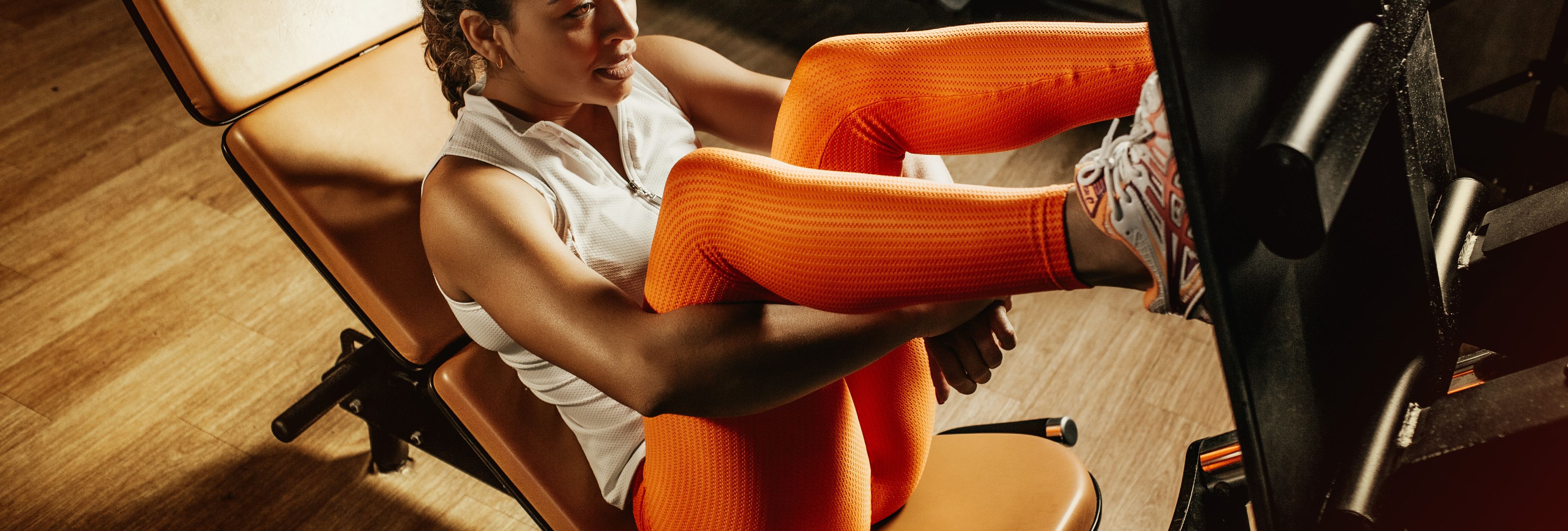
Leg press variations deserve more credit than they typically receive. The standard leg press hits your quads hard when you set your foot placement high and narrow on the platform. Lowering the sled as deep as your hip flexors allow while maintaining a flat lower back will create stretch mediated growth in your quads that back squats cannot match. Change your foot position between sets. A wide stance emphasizes adductors and glutes. A narrow stance with high placement turns the leg press into a quad isolation machine. Do not sleep on this exercise simply because it looks simple.
Leg extensions are not a waste of time despite what the internet strength community claims. Loaded stretches at long muscle lengths drive hypertrophy through mechanisms that compound tension exercises cannot fully replicate. Perform leg extensions at the end of your workout after you have exhausted your compound movements. The key is controlling the eccentric portion and squeezing hard at full contraction. Partial reps with maximal tension outperform lockout grinding for this movement. Add a pause at the top of every rep and you will feel your vastus medialis activate in ways you never have before.
Hack squats and Bulgarian split squats fill the gaps that squats and leg press leave open. Hack squats allow you to hit deep knee flexion with back support, making them accessible for lifters who lack the mobility for full depth front squats. Bulgarian split squats expose strength imbalances between your legs and require core stability that bilateral movements do not demand. If one leg is noticeably weaker, this exercise will reveal it and force you to address it. Use these as accessory movements that complement your compound staples rather than replacing them.
Training Frequency and Volume: The Math Behind Quad Growth
Your quads recover slower than your biceps. This is not an opinion. This is a function of muscle size and the demands you place on them during compound movements. Most lifters do well with two dedicated quad sessions per week, with at least four days between high intensity sessions. If you are squatting heavy on Monday, your next quad focused session should not occur until Friday at the earliest. This does not mean you cannot train other leg functions like hip extension or hamstring work in between. It means you should not repeat the same quad dominant movements until you have adequately recovered.
Volume recommendations for quad growth fall in the range of 12 to 20 sets per week for most natural lifters. This is total volume, not sets per exercise. If you perform 4 exercises with 4 sets each, you are at 16 total sets, which is the sweet spot for most people. Advanced lifters can push toward 25 sets per week but should monitor recovery quality closely. Signs that you are overtraining include strength plateaus, persistently sore knees, and declining performance on your compound movements. Your quads should feel ready to train hard when your next session arrives. If they feel beat up and sluggish, you are accumulating too much weekly volume or not managing your recovery properly.
Progressive overload on quad movements does not always mean adding weight. It means adding tension, time under tension, or mechanical difficulty over time. If you are hitting 8 reps with perfect form and your program calls for a new PR next week, adding 5 pounds is the obvious move. But if your form is breaking down, you are better served by adding a pause at the bottom, slowing down the eccentric, or increasing range of motion with a deeper stance. These variations keep your muscles adapting without requiring you to lift weights you cannot handle safely.
Programming Your Quad Growth: A Sample Approach
Your quad day should follow a logical progression from most demanding to least demanding. Start with your compound movement that requires the most skill and stabilization. Front squats or high bar back squats belong here depending on your goals and mobility. Perform 4 sets of 6 to 8 reps with the intention of adding weight or reps each week. Your second movement should address a specific weakness or quad head that the first movement underserves. Leg press with a narrow high foot placement fits perfectly here. Complete 4 sets of 8 to 10 reps with controlled eccentrics and a hard squeeze at the top.
Move to single joint or isolation work after your compounds are fatigued. This is when leg extensions and sissy squats will be most effective because your quads cannot rely on momentum or supporting muscles to complete the movement. Your stabilizers are pre-exhausted and your quads must handle the load alone. Perform 3 to 4 sets of 12 to 15 reps with a focus on the stretch and squeeze. Finally, add your accessory movement like Bulgarian split squats or hack squats for 3 sets of 10 per leg. This addresses any lingering imbalances and adds finishing volume that drives growth.
Total weekly quad volume should accumulate to approximately 16 to 20 sets spread across 2 sessions. Train this way for 8 to 12 weeks before taking a deload week where you cut volume in half and focus on maintaining strength. This is not optional. This is how you avoid chronic knee pain, patellar tendinitis, and plateaus that last months. Your body adapts during rest. Training breaks it down. Recovery builds it back stronger and bigger. If you never rest, you never grow. This is not a controversial statement. This is biology.
Nutrition and Recovery: Building Bigger Quads Requires More Than Training
Training your quads with intensity is only half the battle. Your body needs calories and protein to build new muscle tissue, and your quads need more of both than smaller muscle groups simply because they are larger. If you are training hard but eating at maintenance or in a deficit, your quad growth will stall. Calculate your caloric needs, add 250 to 500 calories above maintenance, and ensure you are consuming at least 1.6 grams of protein per kilogram of bodyweight. This is not broscience. This is the minimum nutritional foundation for building muscle as a natural lifter.
Carbohydrates are not your enemy when you are chasing quad growth. Your quads store glycogen as their primary energy source during high rep work. Depleting your carb intake before leg day will leave you flat, weak, and unable to complete your sets with the intensity required for growth. Eat your carbs around your training. Consume the majority of your daily carbohydrates in the meals surrounding your workout and scale back elsewhere if you are watching total calorie intake. Fats can take the hit to make room because they do not fuel high intensity training directly.
Sleep and stress management affect quad recovery as much as they affect any other muscle group. If you are sleeping 5 hours per night and running high cortisol from chronic stress, your quads will not grow regardless of how well you program your workouts. Aim for 7 to 9 hours of sleep per night. Manage stress through whatever method works for you. Your legs will not care about your meditation practice but your hormones and nervous system will, and those systems determine whether you grow from your training or just spin your wheels while accumulating fatigue.
Common Quad Training Mistakes That Will Keep Your Legs Small
Skipping legs because they are hard is the number one reason lifters have underdeveloped quads. There is no programming secret that will overcome the fundamental problem of not training your legs consistently. If you are in the habit of doing a few half hearted leg extensions and calling it a leg day, you are wasting your time. Commit to the process. Your legs will grow when you treat them with the same intensity and frequency you give your upper body. This means the same preparation, the same focus, and the same willingness to push through discomfort.
Relying exclusively on back squats is the second most common mistake. Back squats are excellent for overall leg development but they do not fully isolate your quads the way front squats, leg press, and extensions do. Your posterior chain takes over a significant portion of the load during back squats, which means your quads receive less total stimulus per set compared to quad focused movements. You do not need to abandon back squats. You need to add movements that your back squats cannot provide. Programming is about balance, not about picking a single exercise and pretending it does everything.
Ignoring pain in your knees or patellar region is a shortcut to chronic injury that will derail your leg training entirely. Soreness after training is normal. Sharp pain during movements is not. If your knees hurt during squats, fix your mobility, adjust your stance, or replace the movement with something that does not aggravate your joints. Nobody ever built big quads by training through pain until they could not train at all. Address knee issues immediately, work with a physical therapist if needed, and do not let ego override your long term training capacity.
Your Quads Will Grow When You Stop Half Assing It
Building bigger quads is not a mystery. It is not reserved for genetic outliers or people who have been training for a decade. It is the result of consistent effort applied to intelligent programming, progressive overload, and adequate recovery. You need to train your legs twice per week with significant volume. You need to prioritize quad dominant movements over compound movements that let your glutes and hamstrings take over. You need to eat enough to support growth and sleep enough to recover from the damage you inflict on your muscles in the gym.
Pick a program, commit to it for 12 weeks, log every set, and add weight or reps when you can do so without sacrificing form. If your quads are not growing after 12 weeks of serious training, the problem is not your genetics. The problem is your effort, your consistency, or your recovery. Examine each variable, identify the weak point, and fix it. That is the entire process. There is no shortcut. There is no magic exercise. There is just training hard, training smart, and refusing to accept underdeveloped legs as your permanent reality.